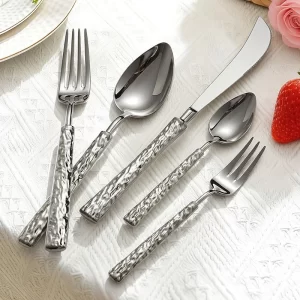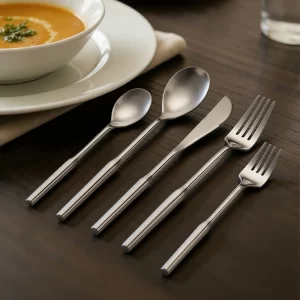
Para os compradores B2B, o sucesso de uma primeira encomenda não garante que o lote seguinte tenha a mesma aparência, dimensões, acabamento ou qualidade geral. Quando os talheres são encomendados regularmente, mesmo pequenas diferenças podem criar problemas para distribuidores, retalhistas, fornecedores de restaurantes e clientes do setor da hotelaria e restauração. A fabricante de talheres de confiança deve ser capaz de manter as especificações acordadas para o produto ao longo da produção em série. Este artigo explica o que causa a variação entre lotes, como os fabricantes a controlam e o que os compradores devem verificar antes de escolherem um fornecedor a longo prazo.
Por que razão as encomendas repetidas de talheres podem apresentar variações de qualidade
As encomendas repetidas são frequentemente descritas simplesmente como “o mesmo produto outra vez”. Do ponto de vista da produção, no entanto, a consistência depende de muito mais do que o nome do produto ou o SKU.
Uma encomenda de repetição pode variar quando se verificam alterações em:
- Especificações do material de aço inoxidável
- Dimensões ou espessura do produto
- Conformação e modelagem
- Peso e equilíbrio
- Polimento e acabamento de superfícies
- Revestimento decorativo ou cor
- Aplicação do logótipo
- Referências relativas a ferramentas ou à produção
- Configuração da embalagem
Estas diferenças podem ser mínimas durante a produção, mas tornam-se evidentes quando os produtos de diferentes lotes são colocados lado a lado.
Para um distribuidor, produtos inconsistentes podem complicar a gestão de stock. Para um fornecedor de restaurantes, as peças de substituição podem não corresponder às entregas anteriores. Para uma marca de retalho, as variações no acabamento ou no design podem afetar a consistência de uma gama de produtos já estabelecida.
É por isso que consistência na qualidade dos talheres deve ser avaliado no âmbito da capacidade de produção e de controlo de qualidade do fabricante — e não apenas verificando se as primeiras amostras parecem estar em boas condições.
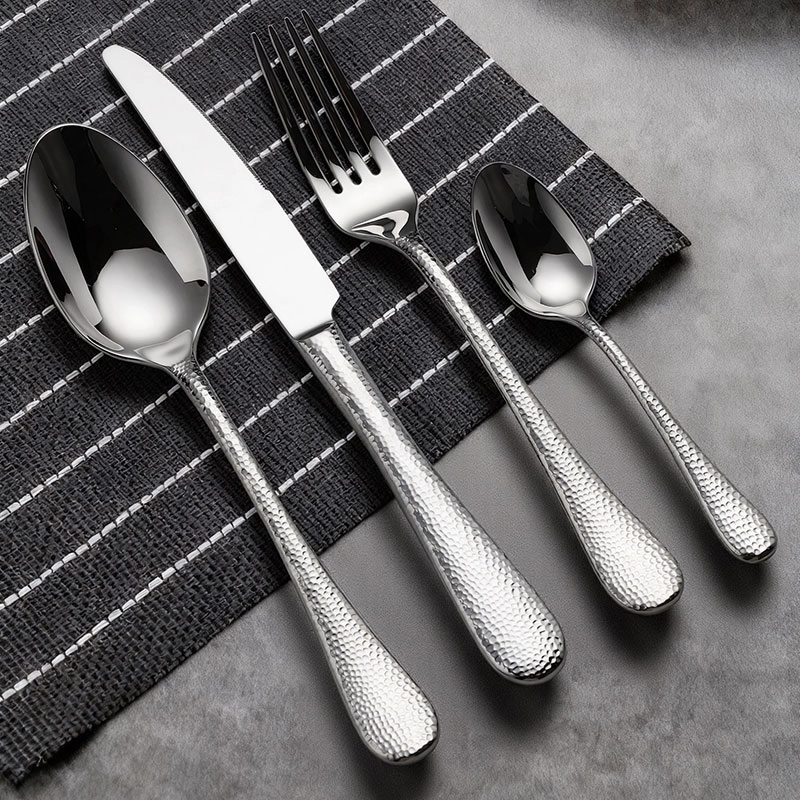
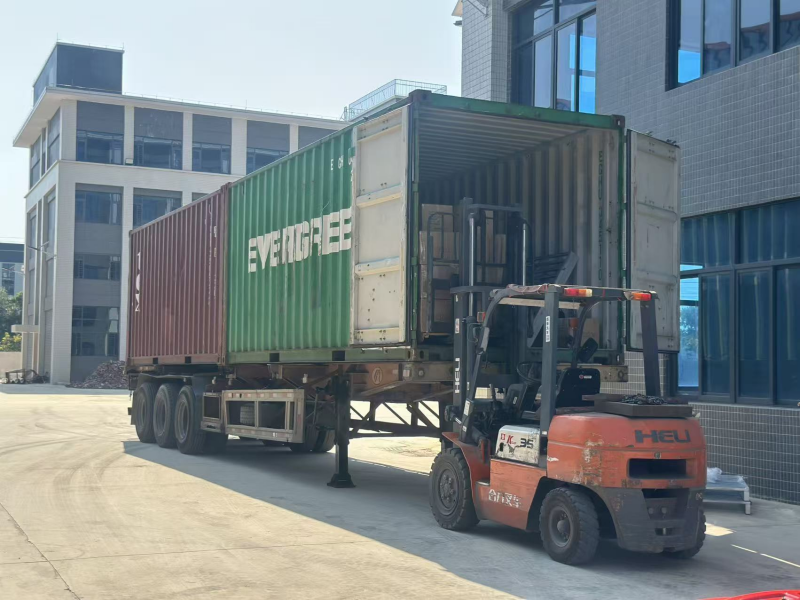
O que causa a variação entre lotes na produção de talheres?
Especificações dos materiais
O aço inoxidável é a base da maioria dos talheres comerciais, mas as especificações do material devem ser claramente definidas antes do início da produção.
Podem ser selecionados diferentes tipos de aço inoxidável de acordo com o design do produto, a aplicação pretendida, os requisitos de desempenho e as especificações do cliente. A gama de produtos da Mcallen inclui opções de aço inoxidável como 18/10, 304, 316, 410, 420 e 430, dependendo do produto e da aplicação.
No caso de encomendas repetidas, o importante é manter a especificação do material acordada em vez de partir do princípio de que materiais visualmente semelhantes produzirão exatamente o mesmo resultado.
Os compradores B2B devem confirmar:
- Tipo de aço inoxidável exigido
- Especificações dos materiais para os diferentes componentes, quando aplicável
- Espessura do produto ou outros requisitos relativos ao material acordados
- Se serão comunicadas quaisquer alterações significativas antes do início da produção
Uma especificação de materiais claramente documentada proporciona ao fabricante uma referência consistente para encomendas futuras.
Conformação e dimensões
A forma de uma colher, garfo, faca ou outro talher é determinada através de processos de moldagem e modelagem. No caso de designs personalizados, as ferramentas de moldagem também desempenham um papel importante na reprodução da forma aprovada.
Pequenas alterações no processo de moldagem podem afetar:
- Dimensões totais
- Forma da pega
- Geometria da concha ou dos dentes
- Alinhamento
- Peso
- Balanço de produtos
No caso de produções em série, o fabricante deve basear-se nas especificações do produto estabelecidas e no projeto aprovado, em vez de tratar cada encomenda como um desenvolvimento totalmente novo.
Isto é particularmente importante para marcas e distribuidores que precisam que o mesmo produto se mantenha consistente ao longo de vários ciclos de compra.
Polimento e acabamento de superfícies
O acabamento da superfície é outra fonte comum de variação visual.
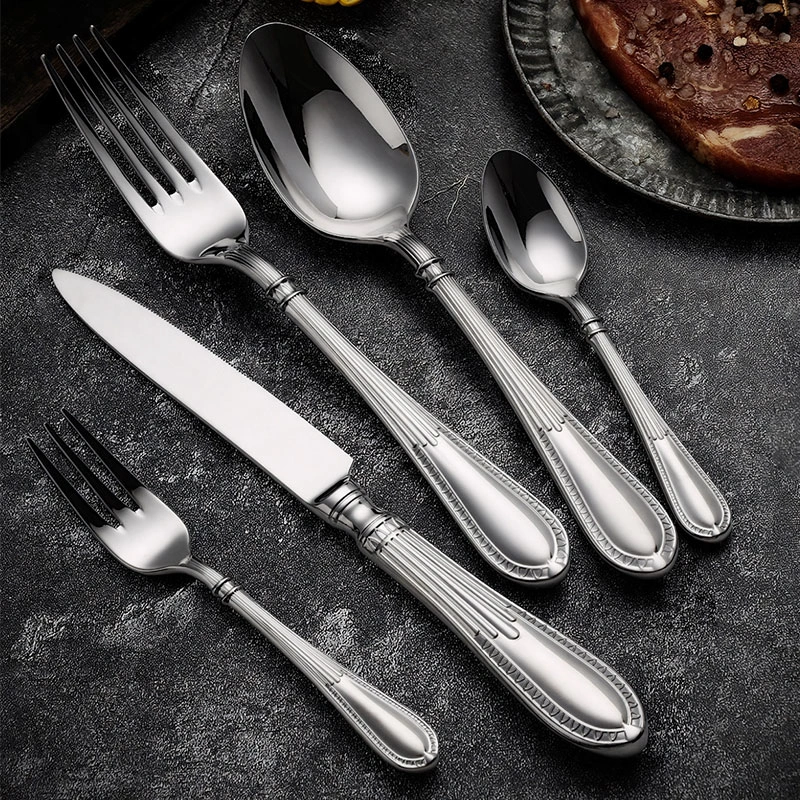
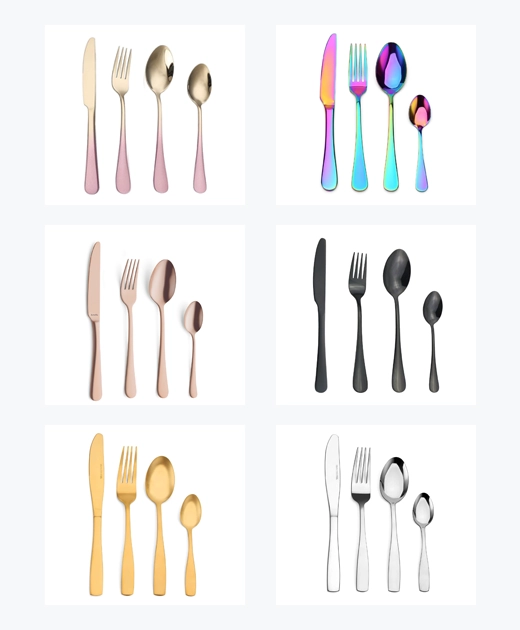
Os talheres podem apresentar acabamentos como polimento espelhado, acabamento mate, acabamento escovado, polimento com água ou revestimentos decorativos, dependendo dos requisitos do produto.
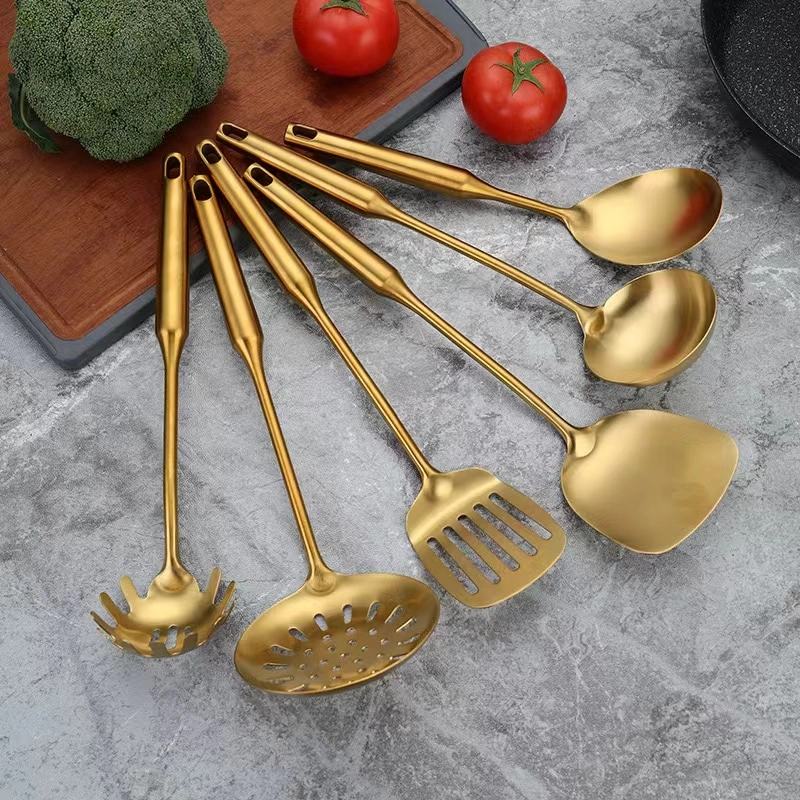
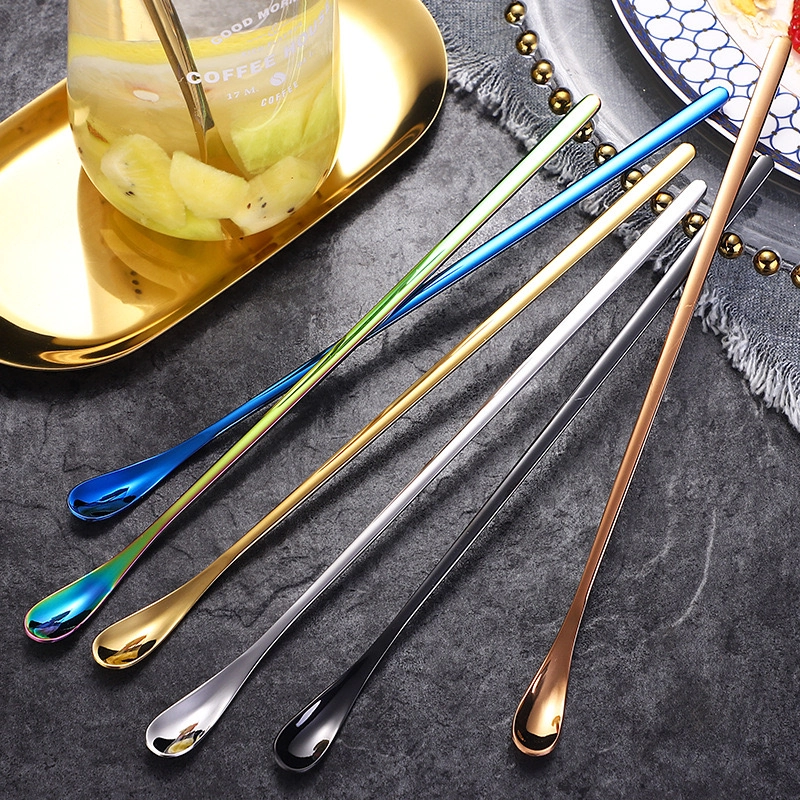
O acabamento deve ser avaliado em comparação com uma amostra aprovada ou com uma especificação claramente definida. Termos como “dourado”, “preto”, “mate” ou “espelhado” podem descrever um acabamento geral, mas podem não fornecer informações suficientes para uma produção repetida e consistente.
No caso de encomendas personalizadas, os compradores devem, por isso, confirmar a referência exata do acabamento antes do início da produção em série.
Um fabricante com as condições adequadas controlo de qualidade dos talheres deve monitorizar o acabamento durante a produção, em vez de se basear apenas numa verificação visual final.
Requisitos relativos ao logótipo e à embalagem
No caso dos talheres fabricados para fabricantes de equipamento original (OEM) e de marca própria, a consistência também se aplica à imagem de marca e à embalagem.
Um logótipo personalizado deve ter os seguintes elementos acordados:
- Conceção
- Tamanho
- Cargo
- Orientação
- Método de aplicação
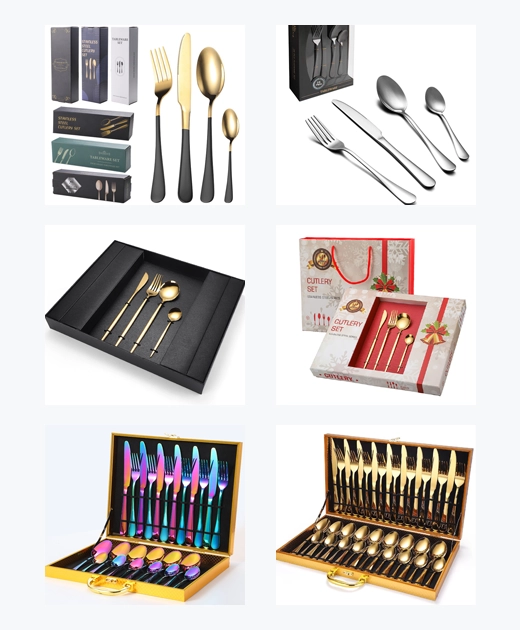
A embalagem deve também ser definida por especificação, nomeadamente no que diz respeito aos produtos fornecidos a clientes dos setores do retalho, da hotelaria e da distribuição.
Se o mesmo conjunto de talheres for encomendado várias vezes, a colocação inconsistente do logótipo ou da embalagem pode criar problemas desnecessários, mesmo quando o próprio produto em aço inoxidável cumpre a norma exigida.
Como um fabricante de talheres mantém uma qualidade constante
Para garantir a consistência nas encomendas recorrentes, é necessário implementar controlos em várias fases do processo de fabrico. O processo exato varia de acordo com o design do produto e os requisitos do cliente, mas existem vários princípios que se aplicam de forma geral.
Comece por uma referência de produto aprovada
A amostra aprovada constitui uma referência importante para encomendas personalizadas e em grandes quantidades.
Antes do início da produção em série, os compradores e os fabricantes devem confirmar os requisitos essenciais do produto, incluindo:
- Material
- Forma e dimensões
- Requisitos de peso, quando aplicável
- Acabamento da superfície
- Cor ou revestimento
- Logótipo
- Definir configuração
- Embalagem
Uma amostra física pode revelar-se particularmente útil para avaliar detalhes que são difíceis de transmitir apenas através dos nomes dos produtos ou de fotografias.
Manter as especificações de produção claras
No caso de encomendas repetidas, os requisitos previamente aprovados devem permanecer disponíveis para a produção subsequente.
A documentação de referência de produção pode incluir desenhos do produto, especificações, requisitos relativos às ferramentas, detalhes de acabamento, instruções relativas ao logótipo e requisitos de embalagem, dependendo do projeto.
O objetivo é simples: o fabricante deve dispor de uma referência clara para reproduzir o produto acordado quando o comprador fizer outra encomenda.
Isto torna-se ainda mais importante para um Fabricante de talheres OEM, em que o produto pode ter sido desenvolvido especificamente para uma determinada marca ou distribuidor.
Verificar os materiais antes da produção
O controlo das matérias-primas é uma parte importante de uma produção consistente.
Antes do início da produção, o material deve corresponder aos requisitos acordados para o produto. Se uma alteração no material puder afetar o produto acabado, tal deve ser esclarecido com o comprador antes da produção.
Isto cria uma ligação mais fiável entre as especificações de compra e os talheres acabados.
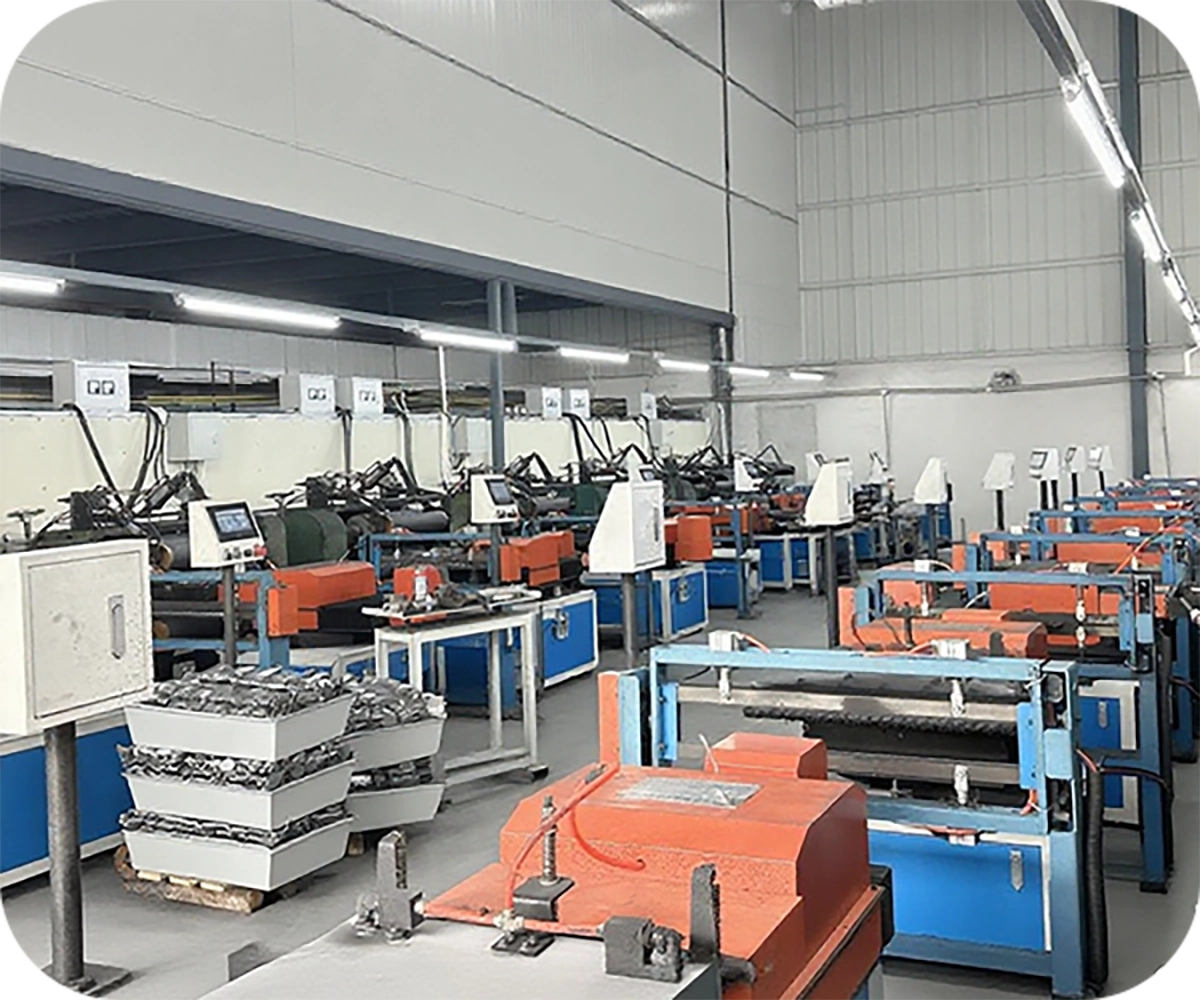
Monitorizar a qualidade durante a produção
O controlo de qualidade não deve começar apenas depois de toda a encomenda ter sido fabricada.
Dependendo do produto, as inspeções de produção podem centrar-se em:
- Dimensões do produto
- Forma e conformação
- Condição da superfície
- Polimento
- Alinhamento das pegas
- Localização do logótipo
- Cor ou revestimento
- Outros requisitos específicos do cliente
A verificação da qualidade durante a produção permite identificar potenciais problemas antes que estes afetem uma quantidade maior de produtos.
As informações sobre o processo de fabrico da McAllen destacam o controlo de qualidade nas diferentes fases da produção, incluindo a inspeção das matérias-primas, a inspeção em linha e a inspeção do produto acabado.
Inspecionar os produtos acabados antes da embalagem
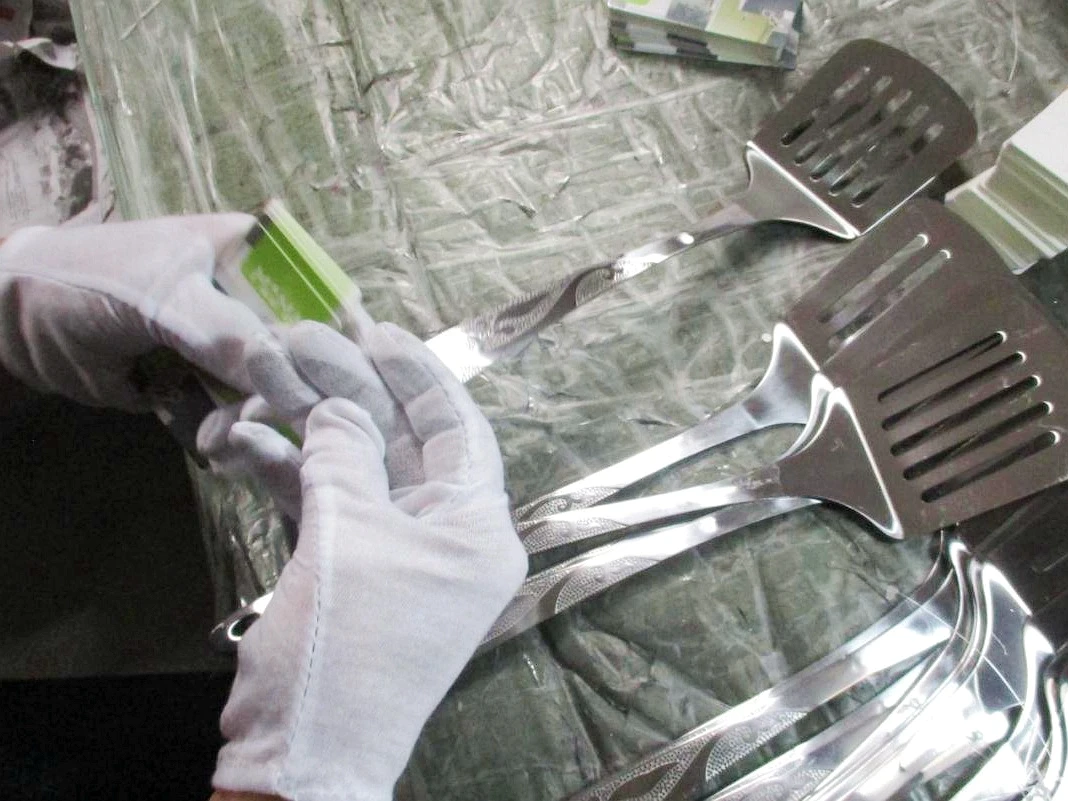
A inspeção final constitui mais um ponto de controlo de qualidade antes do envio.
O âmbito da inspeção deve refletir os requisitos acordados entre o produto e o comprador. A embalagem também deve ser verificada para garantir que a quantidade, a configuração e a rotulagem corretas são utilizadas.
No caso de encomendas B2B recorrentes, esta fase final é importante porque a consistência do produto vai além dos próprios talheres e estende-se à forma como a encomenda é preparada para entrega.
O que os compradores B2B devem verificar antes de encomendar novamente talheres
Os compradores não precisam de controlar eles próprios o processo de produção da fábrica, mas devem definir requisitos claros com o fornecedor.
| Área de Avaliação | O que os compradores devem verificar |
|---|---|
| Material | Tipo de aço inoxidável e requisitos acordados para o material |
| Conceção | Forma, dimensões, design da pega e configuração do conjunto |
| Peso | Peso exigido ou tolerância de produção aplicável |
| Acabamento | Espelhado, mate, escovado, polido à água ou com revestimento decorativo |
| Imagem de marca | Desenho do logótipo, tamanho, posição e método de aplicação |
| Exemplo | Amostra aprovada ou outra referência de produção |
| Ferramentas | Se se aplicam as ferramentas existentes ou as referências de produção |
| CQ | Pontos de inspeção e requisitos de qualidade acordados |
| Embalagem | Formato de embalagem, quantidade e rotulagem |
| Encomendas recorrentes | Se será possível manter as mesmas especificações na produção futura |
Uma das formas mais simples de reduzir a confusão é evitar instruções como “igual à encomenda anterior” sem mais pormenores.
No caso de compras B2B recorrentes, a opção “igual à última vez” deve ser acompanhada de especificações claras do produto e de uma referência aprovada.
Como avaliar um fabricante de talheres para encomendas recorrentes
Ao comparar fornecedores, a primeira proposta não deve ser o único fator a ter em conta.
Um preço unitário mais baixo não significa necessariamente um custo total de aquisição mais baixo, caso a inconsistência dos produtos implique trabalho adicional de inspeção, triagem, substituição ou assistência ao cliente.
Em vez disso, os compradores devem avaliar a capacidade do fabricante para dar apoio ao ciclo de compra na sua totalidade.
Capacidade de produção
Um fabricante adequado deve ser capaz de produzir o produto acordado de forma consistente, no volume de encomendas comerciais exigido.
No caso de produtos personalizados, os compradores devem também compreender como é que o fornecedor lida com a confirmação do projeto, o desenvolvimento de ferramentas, as amostras e os requisitos de produção.
Mcallen's capacidades de fabrico de talheres incluem o desenvolvimento de produtos, a fabricação de ferramentas, a produção e os processos de controlo de qualidade para talheres de aço inoxidável e produtos de mesa relacionados.
Controlo de qualidade
Pergunte ao fabricante como é que a qualidade é controlada antes, durante e após a produção.
Um fornecedor competente deve ser capaz de explicar as etapas e os requisitos de inspeção relevantes, em vez de se limitar a uma afirmação genérica como “alta qualidade”.”
No caso de encomendas repetidas, os compradores devem prestar especial atenção à forma como o fabricante garante a conformidade com as especificações aprovadas do produto.
Aprovação da amostra
As amostras constituem uma oportunidade importante para confirmar um produto personalizado antes da produção em série.
No caso de encomendas OEM/ODM, os compradores podem utilizar amostras para avaliar a forma, o acabamento, a marca e outros detalhes reais antes de avançarem com uma encomenda de maior volume.
A Mcallen disponibiliza opções de amostras padrão e personalizadas para os compradores que precisam de avaliar os produtos antes de efetuarem encomendas a granel.
Capacidade de personalização
Um fabricante de talheres personalizados deve ser capaz de comunicar claramente quais os aspetos de um produto que podem ser personalizados.
Dependendo do projeto, isto pode incluir:
- Forma
- Tamanho
- Material em aço inoxidável
- Acabamento da superfície
- Cor
- Logótipo
- Combinação de conjuntos
- Embalagem
Quanto mais personalizado for o produto, mais importante se torna definir especificações claras antes do início da produção.
Por que razão a consistência na produção é importante para os fabricantes OEM e ODM de talheres
A consistência nas encomendas repetidas torna-se particularmente importante quando um produto de talheres é desenvolvido especificamente para uma marca.
Um produto de grossista padrão pode, em geral, ser encomendado novamente de acordo com uma especificação de produto estabelecida. Um produto OEM ou ODM pode envolver detalhes adicionais, tais como ferramentas personalizadas, dimensões, acabamentos de superfície, marca e embalagem.
Se estes detalhes não forem devidamente controlados, uma pequena alteração na produção pode afetar o aspeto ou a facilidade de utilização do produto final.
Para as marcas que estão a desenvolver uma linha de produtos a longo prazo, o objetivo não é, portanto, simplesmente encontrar um fornecedor capaz de produzir uma amostra bem-sucedida.
O fabricante deve poder prestar assistência ao produto a partir de:
Conceção → Amostra → Confirmação das especificações → Produção em série → Inspeção de qualidade → Repetição da encomenda
É aqui que o facto de se trabalhar diretamente com um fabricante pode trazer vantagens práticas para os compradores B2B.
Talheres McAllen para encomendas a granel e recorrentes
McAllen é uma fabricante de talheres de aço inoxidável a oferecer aos compradores B2B soluções de venda por grosso, OEM e ODM.
Os seus serviços de fabrico e personalização dão resposta a necessidades como o design do produto, a seleção de materiais, o acabamento de superfícies, a personalização de logótipos, as configurações de conjuntos e a embalagem. Estas capacidades permitem aos compradores desenvolver produtos de acordo com requisitos específicos do mercado ou da marca, em vez de se limitarem a designs padrão.
Para os compradores a granel, o foco não se centra apenas no cumprimento da encomenda inicial, mas também na garantia de que os requisitos acordados para o produto sejam mantidos ao longo da produção subsequente. O processo de fabrico da Mcallen inclui etapas de controlo de qualidade que abrangem os materiais, a produção, os produtos acabados e a embalagem.
Para os compradores que desenvolvem produtos personalizados, a Mcallen pode dar resposta aos requisitos de OEM/ODM, abrangendo tanto o próprio produto como os requisitos de marca e embalagem. Os compradores também podem consultar o talheres de aço inoxidável por atacado gama ao avaliar produtos para compras em grande quantidade.
Isto torna a Mcallen uma opção relevante para importadores, grossistas, distribuidores, fornecedores do setor hoteleiro e marcas que necessitem de um parceiro de fabrico para encomendas em grande quantidade e recorrentes de talheres de aço inoxidável.
O que deve confirmar com o seu fabricante antes de fazer uma nova encomenda
Antes de efetuar uma nova encomenda, os compradores devem ter em conta os seguintes pontos:
- A amostra original aprovada continua a ser a referência para a produção?
- A especificação do material de aço inoxidável permaneceu inalterada?
- As dimensões do produto e os requisitos de conceção estão claramente documentados?
- As referências relativas ao equipamento de ferramentas e à produção foram confirmadas?
- O acabamento da superfície foi claramente definido?
- As especificações relativas ao logótipo e à identidade visual mantêm-se inalteradas?
- A configuração da embalagem já foi confirmada?
- Foram comunicadas quaisquer alterações ao nível dos materiais, do design ou da produção?
- Que controlos de qualidade serão realizados antes do envio?
- Será possível manter as especificações acordadas para encomendas futuras?
Estas verificações revelam-se particularmente úteis quando os talheres são vendidos no âmbito de uma gama de retalho já estabelecida, de um programa de hotelaria, de uma linha de abastecimento para restaurantes ou de um catálogo de um distribuidor.
Conclusão
A consistência nas encomendas recorrentes não se resume apenas a reproduzir o mesmo design de talheres. As especificações dos materiais, a moldagem, o acabamento, as ferramentas, a marca, a inspeção e a embalagem têm de permanecer em conformidade com os requisitos aprovados para o produto.
Para os compradores B2B, o fabricante de talheres de aço inoxidável de qualidade deve, por conseguinte, ser avaliado quanto à sua capacidade de manter a consistência do produto, tanto no primeiro lote como nos lotes de produção subsequentes.
Se estiver a fazer encomendas recorrentes ou em grande quantidade de talheres, forneça à Mcallen os seus design do produto, requisitos de materiais, acabamento, quantidade, logótipo, embalagem, mercado-alvo e especificações OEM/ODM. A equipa da Mcallen pode colaborar consigo para avaliar a solução adequada para o fabrico de talheres e definir os requisitos necessários para uma produção repetida e consistente. Contactar-nos Para dar início às suas encomendas de talheres de qualidade e a granel!