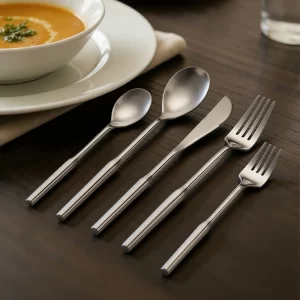
When sourcing stainless steel flatware, many purchasers, especially restaurants, hotels, and brand owners, often ask the same question: “Is heavier flatware always better quality?” At first glance, weight seems like a simple and intuitive benchmark. A heavier fork, spoon, or knife feels more solid in the hand and is often associated with durability and premium quality. As a result, many B2B buyers specifically request heavyweight flatware when placing wholesale orders.
However, from a manufacturer’s perspective, weight alone does not define quality. In some commercial applications, heavier flatware may even be less practical or cost-efficient. Mcallen shares a manufacturer-level explanation of how flatware weight is determined, when heavier cutlery makes sense, and how purchasers should evaluate stainless steel flatware beyond grams and thickness.
Why Flatware Weight Is Often Used as a Quality Indicator?
Weight is one of the most noticeable physical attributes of a cutlery set. When purchasers compare samples, heavier flatware usually creates a stronger first impression.
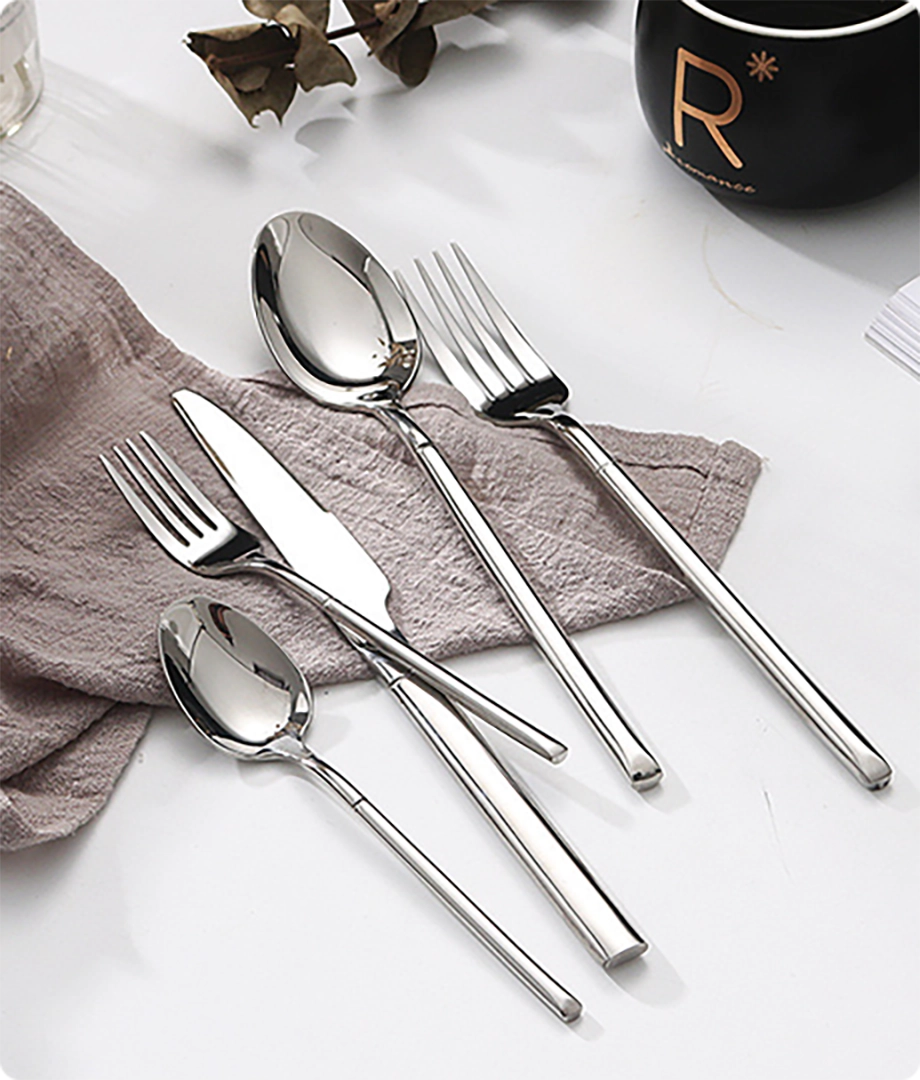
There are several reasons why weight has become a common purchasing reference:
- It is easy to measure and compare
- Heavier flatware feels more stable during use
- Many premium restaurants traditionally use heavier cutlery
- Some suppliers market weight as a shortcut for “high quality.”
While these assumptions are understandable, they can also be misleading. Weight is an outcome of design and manufacturing choices—not a guarantee of durability or performance.
What Actually Determines the Weight of Stainless Steel Flatware?
Stainless Steel Grade
Most commercial flatware is made from 18/10 or 18/0 stainless steel. In reality, the density difference between these grades is minimal. Steel grade affects corrosion resistance, surface appearance and long-term performance. However, it does not significantly change the overall weight of a cutlery set.
Thickness and Structural Design
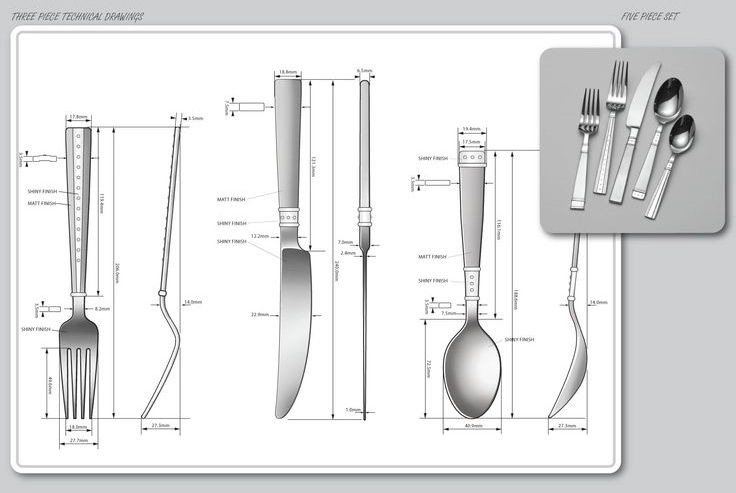
The primary factor influencing weight is how the thickness is distributed. Some flatware designs add excessive thickness to the handle while leaving functional areas unchanged. Others use balanced thickness and reinforced stress points.
Well-designed flatware:
- Reinforces forks, spoons, bowls, and knife edges
- Maintains structural strength without unnecessary material
- Feels balanced rather than simply heavy
From a manufacturing standpoint, smart structure matters more than raw thickness.
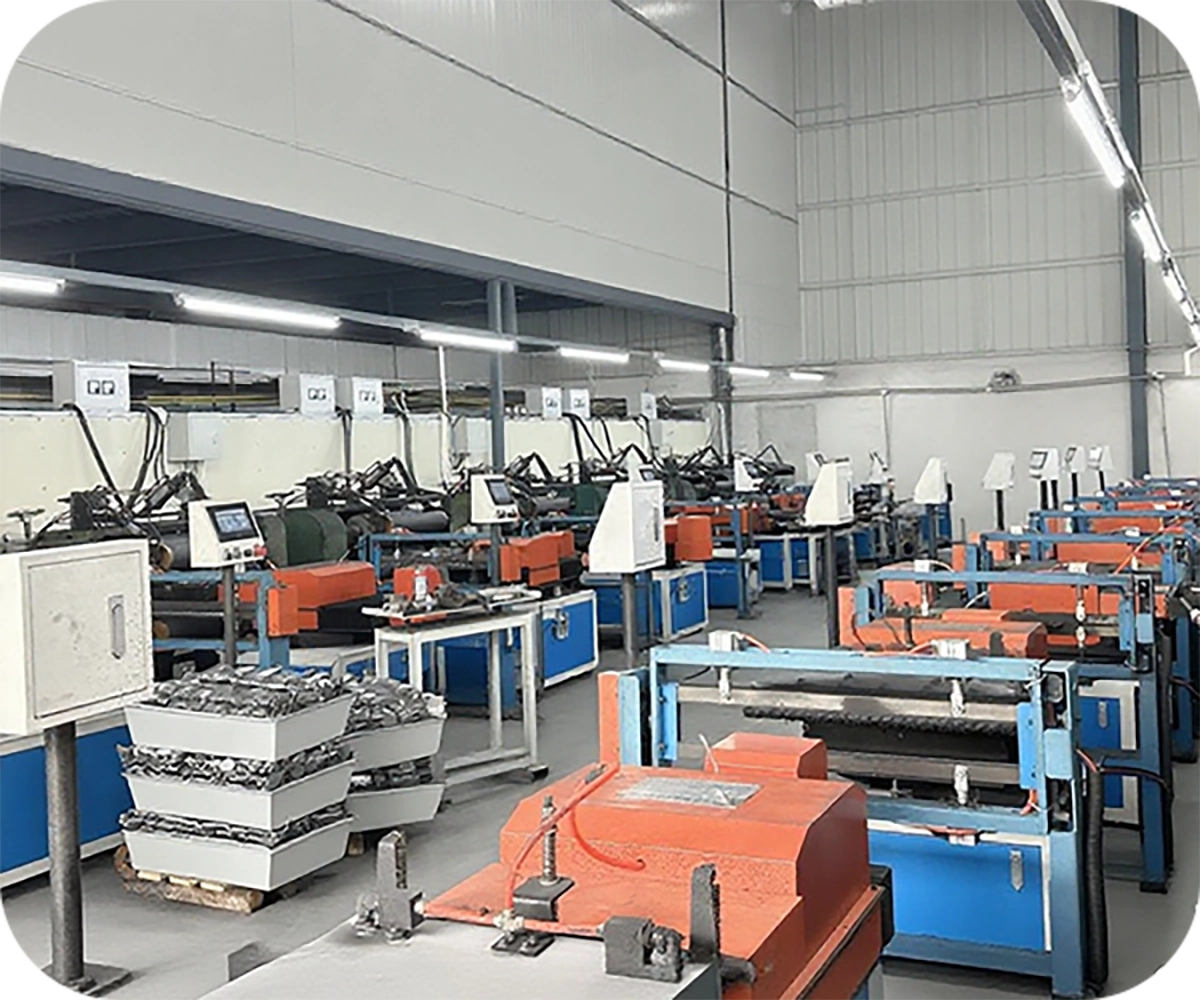
Manufacturing Process
Manufacturing methods also influence weight and performance:
- Precision stamping and forming allow strength without excess weight
- Inferior processes may rely on extra thickness to compensate for weak structure
- Proper edge finishing improves durability without increasing mass
In some cases, heavier flatware is simply compensating for inefficient production techniques.
The Real Advantages of Heavy Flatware
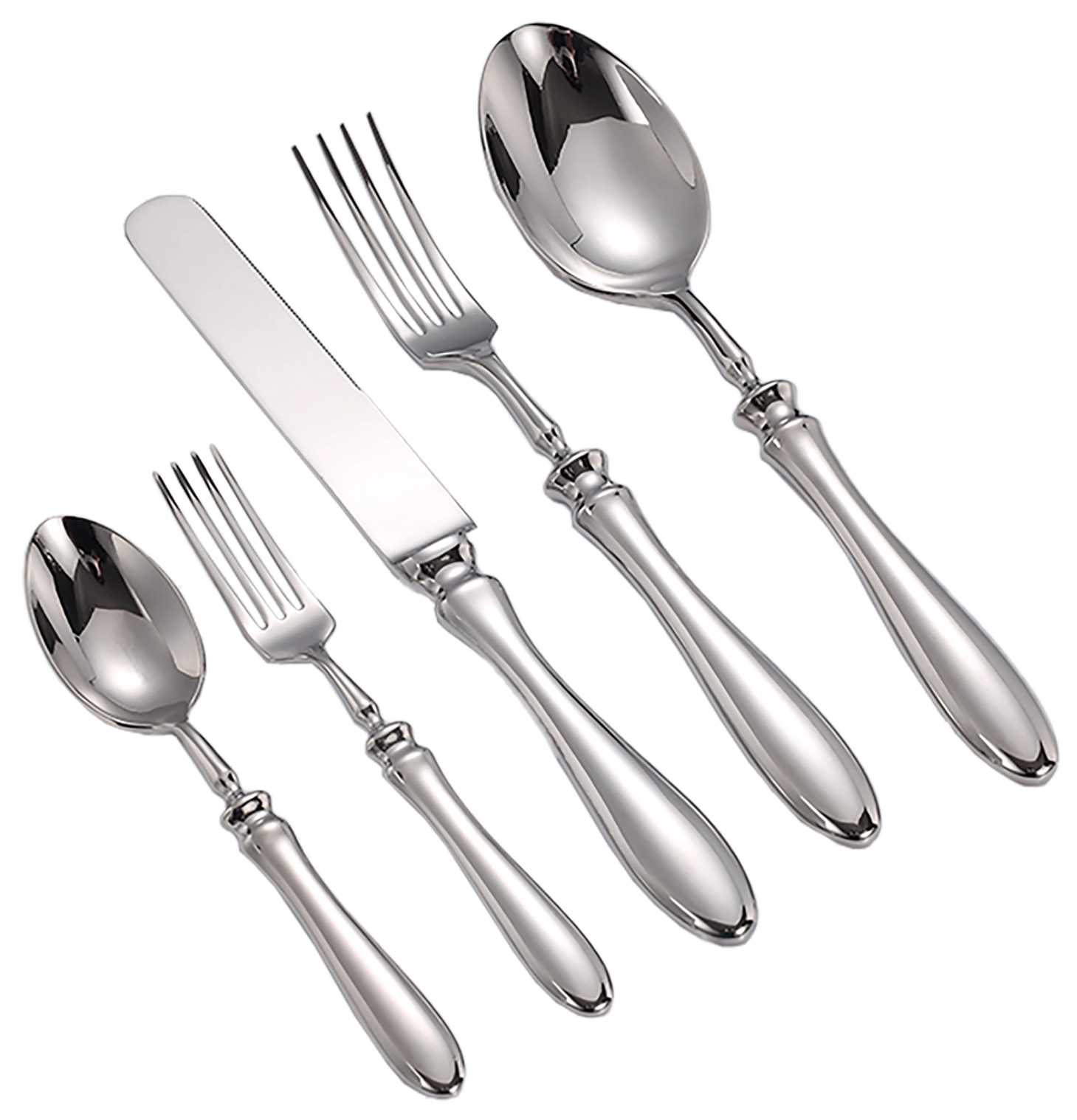
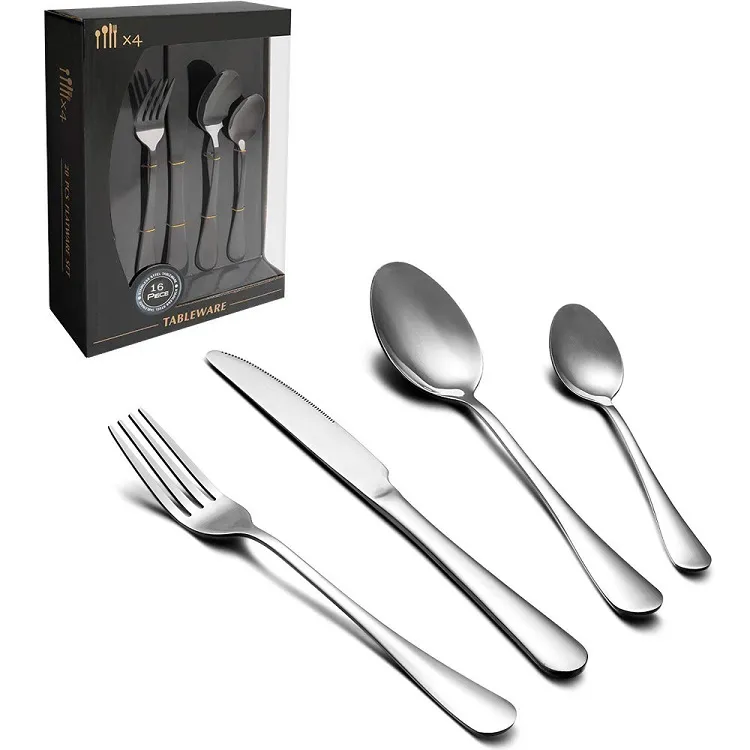
Heavier stainless steel flatware does offer benefits in certain scenarios.
Premium Dining Experience
Heavy flatware feels more substantial and formal, which suits:
- Fine dining restaurants
- Luxury hotels
- Banquets and special events
The added weight enhances perceived value and table presentation.
Gift and Retail Cutlery Sets
For retail-oriented cutlery sets, weight contributes to:
- A premium unboxing experience
- Higher perceived value
- Better appeal for holiday or gift markets
In these cases, weight is part of the product positioning strategy.
Why Heavier Flatware Is Not Always the Best Choice for Commercial Use?
Comfort and Operational Efficiency
In commercial foodservice, flatware is handled frequently—not only by guests, but also by staff.
Overly heavy flatware can:
- Increase staff fatigue during setup and clearing
- Slow down service in high-turnover restaurants
- Reduce comfort during long meals
For many operators, ergonomics outweigh visual heaviness.
Durability Myths in Commercial Use
Heavier does not automatically mean:
- More resistant to bending
- Better edge retention
- Longer service life
Durability depends more on:
- Steel quality
- Structural reinforcement
- Edge and joint finishing
A well-engineered lighter flatware set can outperform a poorly designed heavy one.
Logistics and Cost Implications
For wholesale purchasers, weight affects more than product feel.
Heavier flatware increases:
- International freight costs
- Warehousing expenses
- Handling and transportation effort
For large-volume orders, these hidden costs can significantly impact total procurement budgets.
When Lighter Flatware Is the Better Choice?
In many commercial environments, lighter, but structurally sound, flatware performs better.
Typical examples include:
- High-turnover restaurants and chains
- Buffets and catering operations
- Institutional dining and airlines
- Projects prioritizing efficiency and cost control
In these applications, balance, durability, and comfort matter more than mass.
How to Evaluate Flatware Quality Beyond Weight?
Material Safety and Standards
Ensure the flatware meets international food-contact safety requirements and resists corrosion over time.
Thickness Distribution
Check whether reinforcement is applied where it matters, rather than excessive material in non-functional areas.
Edge Finishing and Polishing
Smooth edges, consistent polishing, and safe handling indicate manufacturing quality.
Balance and Ergonomics
Well-balanced flatware improves user comfort and reduces fatigue, especially in commercial use.
How Mcallen Approaches Flatware Weight Selection?
At Mcallen, we do not promote a “heavier is always better” philosophy.
Instead, we:
- Offer multiple weight and thickness options
- Recommend suitable designs based on application scenarios
- Support OEM and ODM customization
- Help B2B buyers balance durability, comfort, and cost
Our goal is to deliver the right stainless steel flatware solution for each use case, not simply the heaviest product.
Manufacturer’s Recommendation: How to Evaluate Flatware Weight?
Weight should be treated as one reference point, not the deciding factor. Understanding how flatware will be used—and working with an experienced manufacturer—leads to better long-term results than selecting based on grams alone.
Conclusion
So, is heavier flatware always better? The answer is clearly no. High-quality stainless steel flatware is defined by:
- Smart design
- Proper material selection
- Manufacturing precision
- Application-specific performance
If you are sourcing wholesale flatware or cutlery sets for restaurants, hotels, or private-label brands, Mcallen is ready to support you with professional flatware manufacturing insight and customized solutions. Contact us today to discuss the most suitable flatware options for your project.