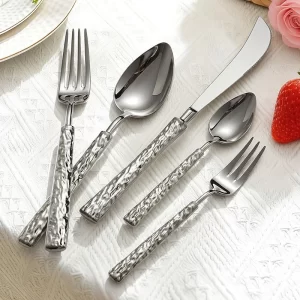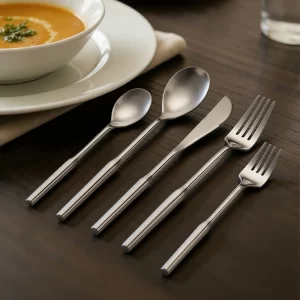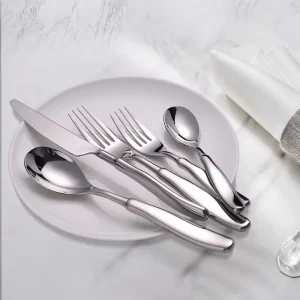
Launching or upgrading a private label flatware program goes beyond selecting a pattern. Success depends on aligning premium positioning, verified compliance, repeatable quality, and a replenishment model that protects margins at scale. As a professional stainless steel flatware manufacturer, Mcallen offers a guide that provides distributors and wholesalers with a practical playbook covering material selection, finish durability, documentation, MOQ strategies, and rolling replenishment, so you can move from RFQ to reliable reorders with fewer surprises. This guide is a specification primer for material and finish decisions, a diligence checklist for lab tests and documentation, and an operational handbook for MOQ strategy and rolling replenishment.
What Is Private Label Flatware?
Private label flatware refers to cutlery manufactured by a supplier but branded and sold under another company’s name. For distributors and wholesalers, the choices you make in materials, finishes, compliance, and operations directly affect:
- Product durability and appearance
- Brand positioning in premium or value tiers
- Margin protection and inventory efficiency
- Customer satisfaction and return rates
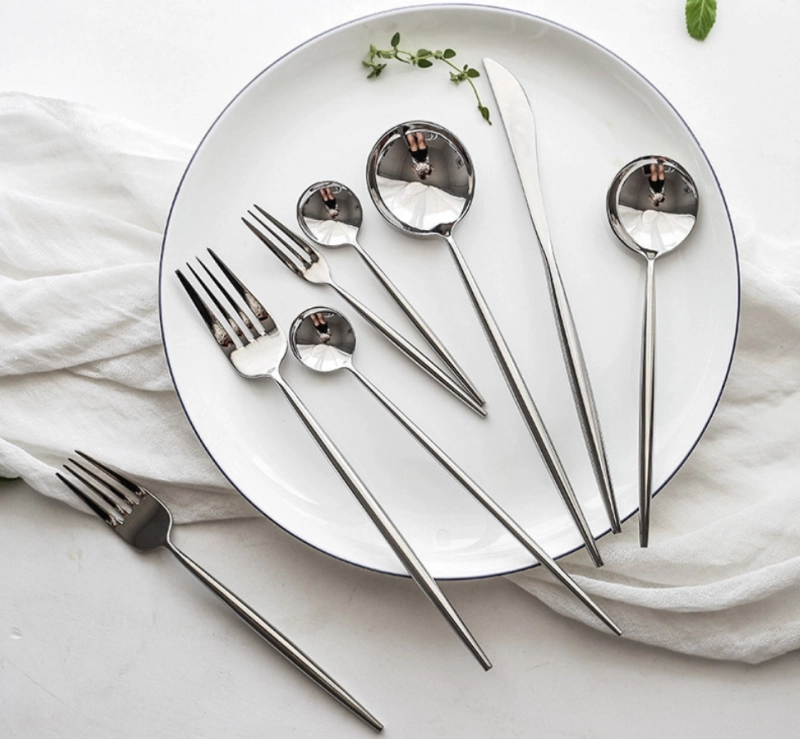
Key Takeaways of Purchasing Private Label Flatware
- 18/10 stainless steel, combined with disciplined finishing and testing, delivers superior corrosion resistance and long-term brand longevity compared to value-tier ferritic alloys.
- Compliance should be built in, not added later: prepare EU Declarations of Compliance (DoC) and GMP records, confirm FDA food contact suitability, manage REACH/LFGB documentation, and assess Prop 65 exposure.
- Reduce MOQ and simplify replenishment by standardizing base patterns, bundling SKU families, applying light customization, locking capacity blocks, and sharing forecasts.
Tip 1: Material Choices for Premium Positioning: 18/10 vs 18/0
Choosing the base alloy sets your long-term brand experience.
Metallurgy and Corrosion Implications
| Alloy | Composition | Characteristics | Considerations |
|---|---|---|---|
| 18/10 (AISI 304) | Austenitic, nickel-bearing | Stable austenitic structure; robust passive layer | Excellent resistance to pitting, tea staining, and dishwasher conditions |
| 18/0 (AISI 430) | Ferritic, nickel-free | Magnetic, cost-advantaged | More vulnerable to staining and pitting; careful polishing and clear care instructions are required |
Implications for Private Label Programs:
- For premium, dishwasher-safe flatware, specify 18/10 and define finish acceptance criteria.
- For high-volume, cost-sensitive lines, 18/0 is acceptable with clear care instructions and strict polishing controls.
Total Cost of Ownership: Why 18/10 Pays Off
18/10 flatware can lower lifetime costs by reducing pitting, staining, and finish degradation. Include tooling amortization, warranty returns, and replenishment carrying costs. Even modest replacement reductions can offset alloy premiums over multi-year programs.
Material Verification Checklist
- Grade confirmation via spectrometer readings tied to heat numbers
- Weight/dimension windows per SKU (include surface roughness targets)
- Corrosion screening plan, including side-by-side dishwasher cycle tests when finishes or processes change
Reference: Outokumpu Core range, Aperam technical specifications, and stainless steel corrosion guidance.
Tip 2: Finishes and Durability Testing
Finish selection affects first impressions, perceived quality, and return rates. Avoid vague adjectives—define measurable acceptance criteria.
Finish Options and Trade-offs
| Finish | Appearance & Handling | Strengths | Considerations |
|---|---|---|---|
| Mirror polish | High gloss, crisp reflections | Premium appearance; easy to wipe | Shows fingerprints and micro-scratches easily |
| Satin/brushed | Subtle sheen, linear grain | Hides smudges; everyday appeal | Consistent grain direction across parts is critical |
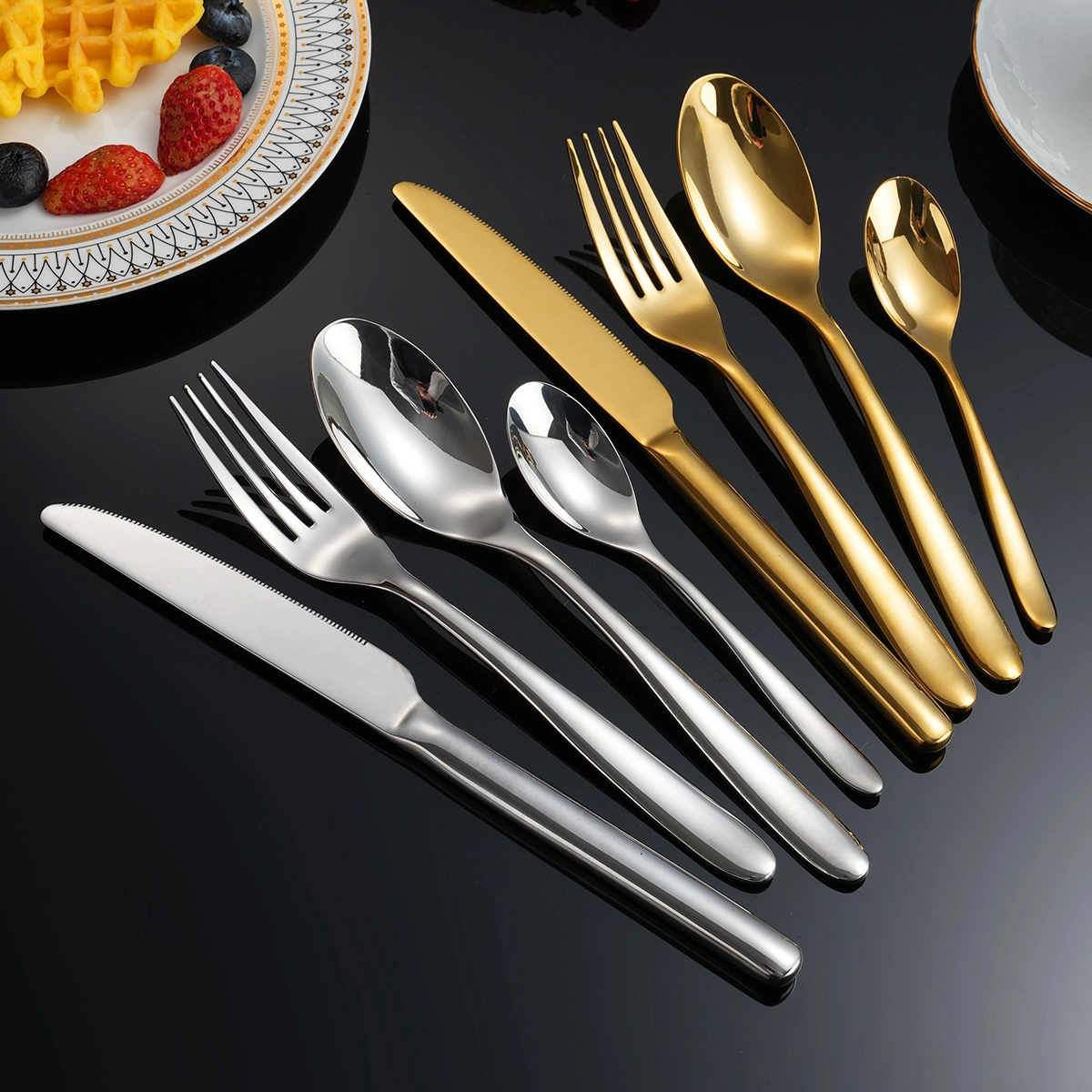
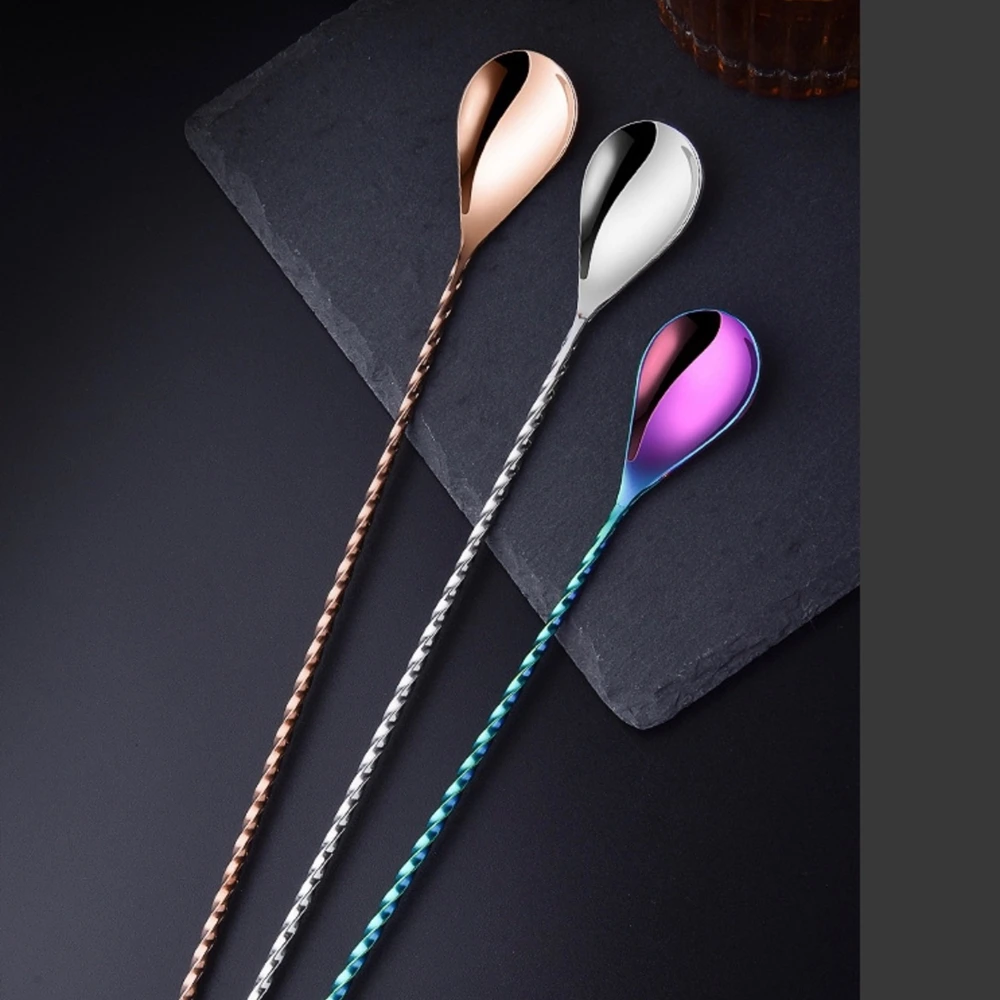
| PVD color coating | Thin decorative layer (e.g., black, gold) | Adds color variety and abrasion resistance | Durability depends on pretreatment; adhesion & dishwasher criteria required |
| Stonewash/tumble | Matte, slightly textured | Masks wear; tactile aesthetics | Acceptable variation must be defined |

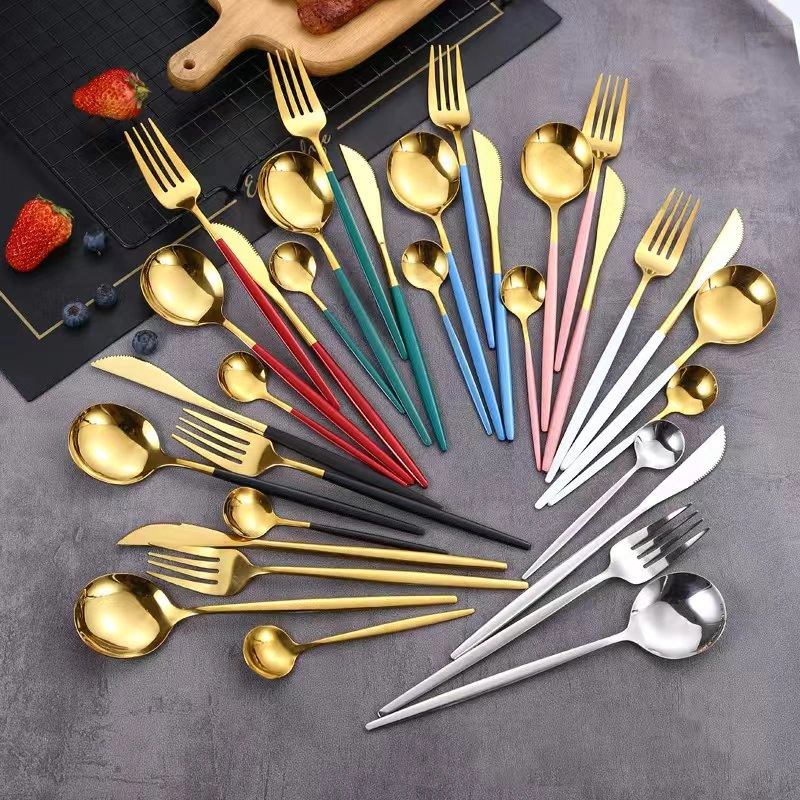

Recommended Finish Testing Protocols
- Dishwasher cycles: Reference EN 12875-1; require no significant discoloration or delamination after agreed cycles (e.g., 125+), with PVD ΔE color change within thresholds.
- Abrasion: Use ASTM D4060 Taber abrasion for coated samples; establish a visual wear index for uncoated stainless.
- Adhesion: Cross-cut per ISO 2409 or ASTM D3359; target 4B/5B equivalency, no flaking.
- Salt spray screening: ISO 9227 neutral salt spray for comparative screening; combine with dishwasher cycles for realistic durability.
Tip 3: Compliance and Documentation Essentials Confirm
Compliance is your program’s passport. Focus on the right documents for the right regulations:
- EU/EEA: Declaration of Compliance, GMP records (Regulations 1935/2004 & 2023/2006)
- USA: FDA food contact suitability, Food Contact Substance Notifications
- Germany/LFGB: BfR guidance on metals in kitchen utensils
- REACH/SCIP: Communicate Article 33 info for substances ≥0.1% w/w
- UK: FSA guidance for food contact materials
- California Proposition 65: Evaluate exposure scenarios and safe harbor levels
Internal SOP tip: Keep a versioned “compliance pack” aligned to each SKU family, including lab reports.
Tip 4: MOQ Strategies and Rolling Replenishment
MOQ and replenishment mechanics are where margins are won or lost. Here’s how to reduce starting friction and keep stock flowing without bloating inventory.
- Standardize core patterns, add light customization (laser logo, restrained PVD)
- Bundle SKU families to manage per-SKU MOQ while reaching tiered pricing
- Share forecasts, consider vendor-managed inventory (VMI) for steady movers
- Reserve capacity blocks ahead of peak season; use reorder-point or DRP logic
Tip 5: Sampling, QC, and Pre-Shipment Checks
It’s necessary to treat approvals as engineering change control.
- Lock drawings and specs, run First Article Samples
- Approve golden samples (retained across factory, buyer, neutral site)
- Pilot new finishes with durability protocols
- Use ANSI/ASQ Z1.4 or ISO 2859-1 sampling plans with baseline AQLs (0% critical, 2.5% major, 4% minor)
- Four QC gates: IQC, IPQC, FQC, OQC/PSI
Tip 6: Packaging and Sustainability
In the EU/UK, include importer/distributor details, material grade, and care symbols, and keep the Declaration of Compliance and supporting tests ready for inspection per the EU Framework and GMP rules and UK retained guidance.
In the US, maintain FDA food contact documentation for coatings/adjuvants where applicable and ensure consumer labeling is accurate.
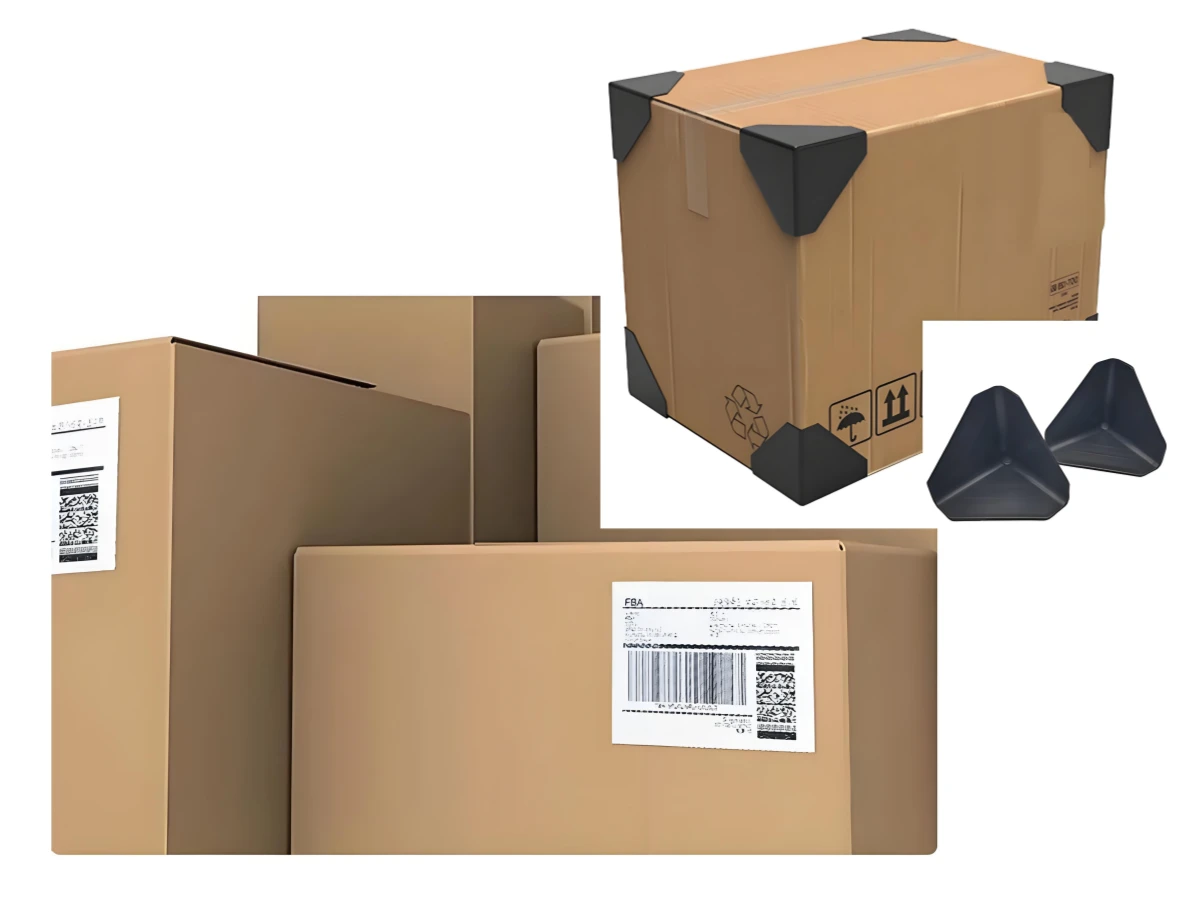
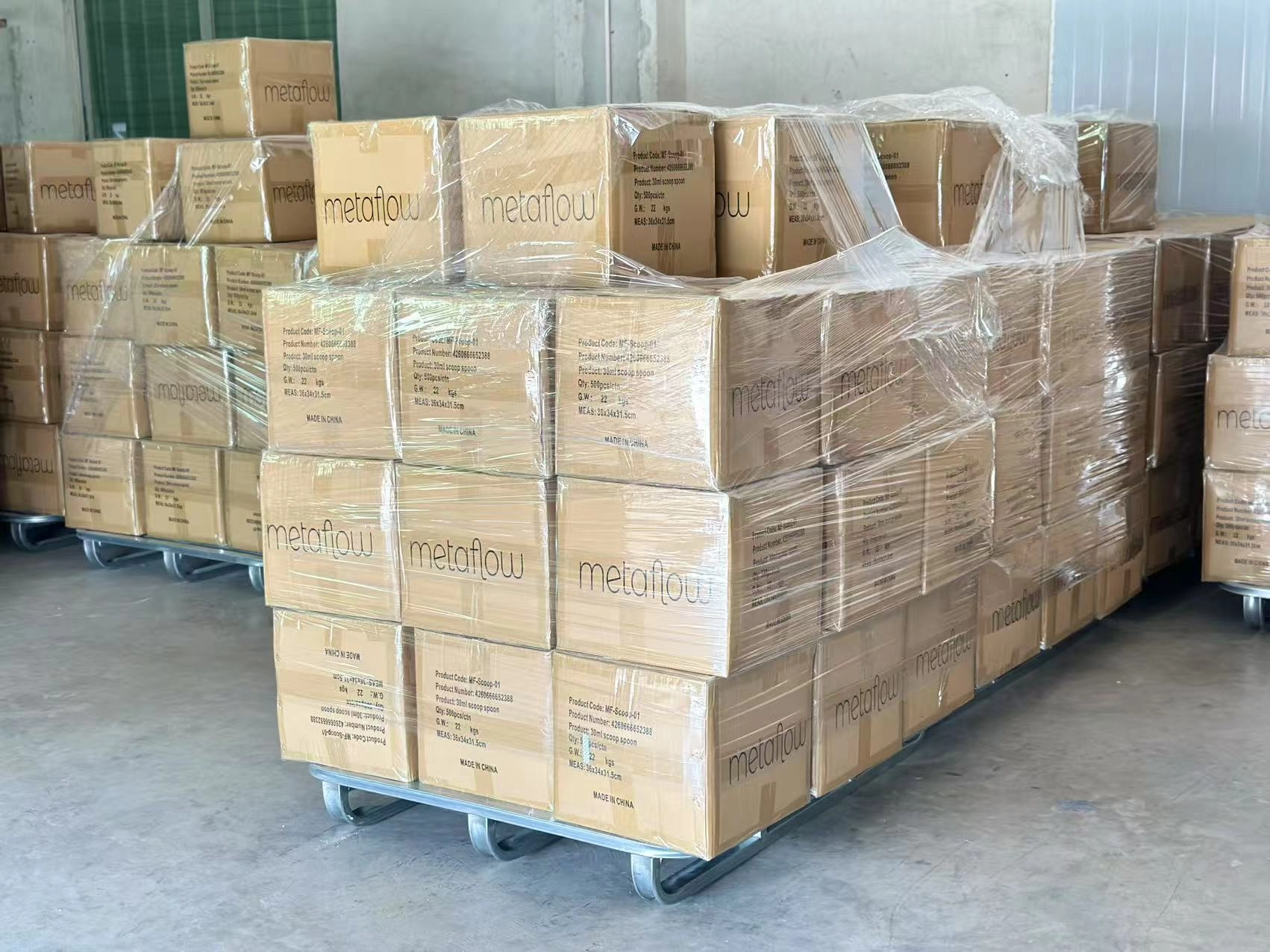
Favor recyclable paperboard, right sized inner trays, and avoid intentionally added PFAS where restricted; engineer outer cartons for ocean freight durability.

Lead Times and Planning Windows (2026 Baseline)
Plan backward from the shelf date and add buffers where variability is highest.
- Tooling: 2–6 weeks (minor updates), longer for new patterns
- Mass production: 4–8 weeks, add 2–4 weeks for PVD or peak season
- Ocean freight: 20–40 days port-to-port (US/EU)
- Total RFQ to shelf: 3–6 months, including sampling, tests, and onboarding
FAQ of Private Label Flatware for Distributors
When is 18/0 acceptable?
Value tiers with clear care instructions, polish quality controls, and no dishwasher-life guarantee.
Do I need a lab test for every batch?
Not necessarily. Maintain retained samples, perform periodic verification, and target tests when materials, finishes, or suppliers change.
How should I approach PVD color selections?
Start with limited colors, validate adhesion and dishwasher protocols, then expand once stability is proven.
What’s a good starting AQL?
0% critical, 2.5% major, 4% minor baseline, adjusted based on returns data.
Work with Mcallem, a Professional Flatware Manufacturer
When launching or upgrading a private label flatware line, choosing the right manufacturing partner is critical to ensure quality, consistency, and brand success. Mcallen provides:
- OEM/ODM support for custom designs and branding
- Flexible MOQ and rolling replenishment
- Full QC system with retained samples and batch traceability
- Compliance documentation ready for EU, US, and other major markets
With extensive experience, robust product range, and full-service capabilities, Mcallen delivers high-quality, custom private label flatware tailored to your business needs. Contact us to discuss your private label flatware project and ensure a reliable, premium program with minimal surprises.