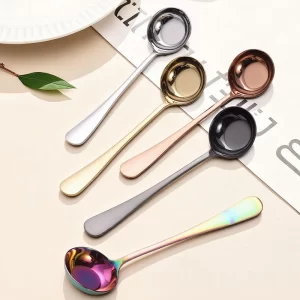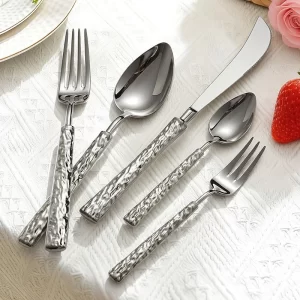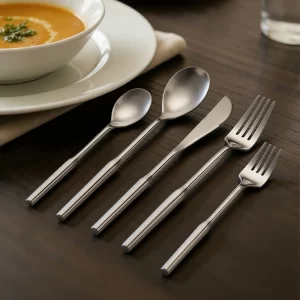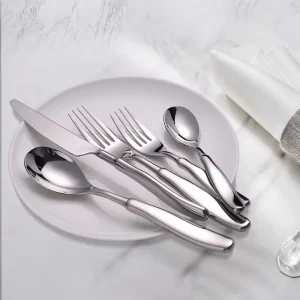
Turn a first-order assortment into a clear quantity matrix, so style, color, component and packaging minimums can be assessed separately.
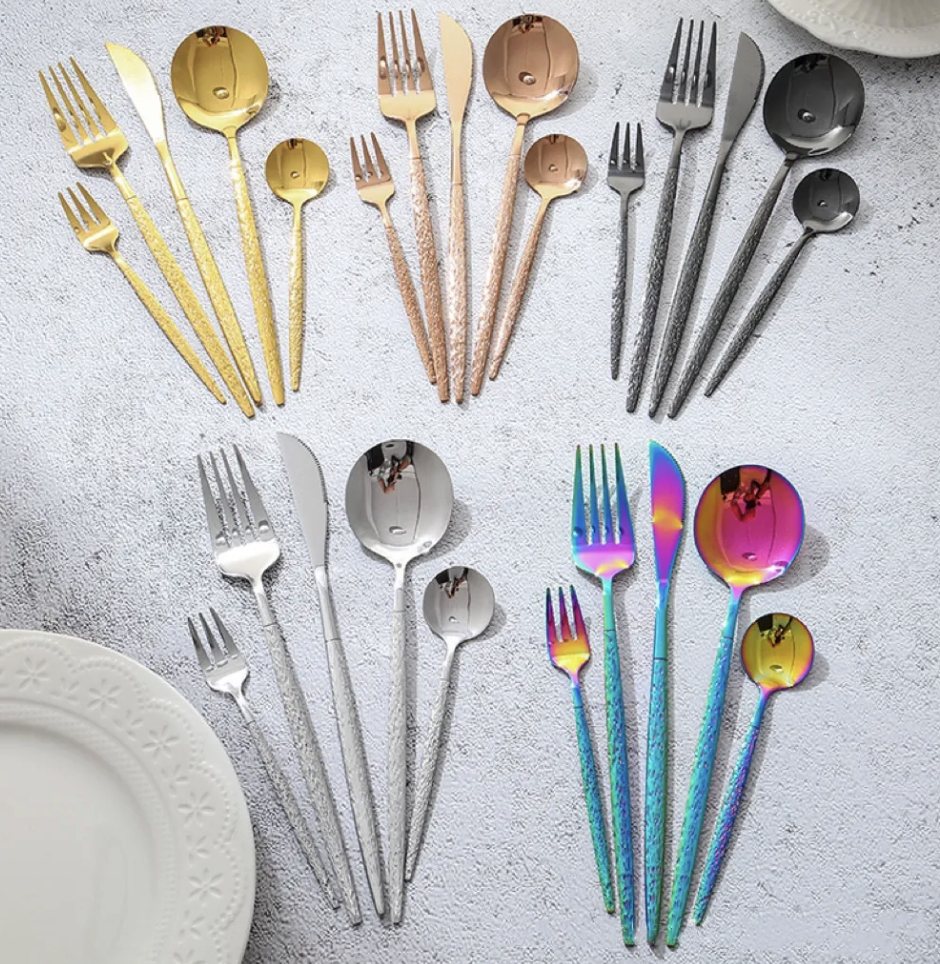
The buying decision Count the sellable SKUs, map their shared components, and confirm each applicable minimum before committing cash to the assortment.
“Can I combine several colors to reach the MOQ?” is a useful question, but it is incomplete. A supplier may have separate minimums for the base pattern, color process, individual utensil, printed box and final assembly. Meeting one minimum does not necessarily meet the others.
An SKU is a stock-keeping unit: one distinct product configuration in your inventory. MOQ means minimum order quantity.
To plan a mixed-SKU flatware order, translate the assortment into a matrix before negotiating. This makes it easier to identify which variation creates excess inventory and whether a simpler launch would work better. It also gives the supplier a clear proposal to assess.
Separate a style from a sellable SKU
A pattern describes the underlying design. A sellable SKU identifies the exact combination your customer orders: pattern, finish, color, piece configuration and packaging. One pattern offered in three colors and two set sizes can become six retail SKUs before packaging languages are considered.
Do not assume the same tooling means every configuration can share the same minimum. Colored finishing and printed packaging may involve their own setups or purchasing quantities. Ask for a written answer for each layer rather than treating “flexible MOQ” as an unlimited mixing policy.
Build the quantity matrix first
The numbers below are a hypothetical launch plan. They are neither supplier minimums nor recommended order quantities.
| Hypothetical first-order assortment — quantities are retail sets | ||||
| A | Same base design | Silver mirror | 24 pieces | 400 |
| B | Same base design | Gold tone | 24 pieces | 200 |
| C | Same base design | أسود | 24 pieces | 100 |
| D | Same base design | Silver mirror | 30 pieces | 100 |
The plan totals 800 retail sets. However, the silver quantity is split between two configurations, while gold and black may need independent processing runs. If SKU D adds a salad fork, that utensil has its own component demand. If all four SKUs use different printed boxes, packaging complexity increases again.
Before asking which quantities can be combined, expand the set contents into individual utensils. If the example 24-piece sets each contain six knives, six dinner forks, six spoons and six teaspoons, the 700 sets across A, B and C require 4,200 of each common utensil. If D contains those same pieces plus six salad forks, it adds 600 of each common utensil and 600 salad forks. Total demand is 19,800 individual utensils, with 4,800 of each common component. These are assumed contents for the worksheet, not universal definitions of 24- or 30-piece sets.
Shared component quantities may help the supplier evaluate production, but silver, gold and black still need separate finish review. The component total does not prove that all 800 sets qualify for one combined minimum.
Ask five questions about minimums
- Is the minimum measured in individual pieces, place settings or retail sets?
- Does it apply per pattern, per color, per utensil or per order?
- Can an existing mold support the requested component mix?
- Is printed packaging subject to a separate minimum purchase?
- What happens to excess packaging or components that are paid for but not assembled?
Request ownership, storage duration, identification and future-use terms for any leftover materials. A promise to “keep boxes for next time” needs enough detail to remain useful when staff or packaging designs change. Confirm whether the next order can use those materials without another artwork or setup charge.
Evaluate component demand and packing requirements before approving the opening order. AI-generated conceptual illustration; not an actual Mcallen product or shipment photograph.
Reduce complexity where the customer will not miss it
If the proposed mix is not feasible, change one variable at a time. You might launch one core color, use one set configuration, or use a shared unprinted box with a correctly differentiated label. Each option has different effects on retail presentation, stock visibility and future reorders.
For example, moving 100 black sets into a silver launch may simplify supply, but only if the distributor can sell the resulting assortment. A manufacturing convenience is not evidence of market demand. Validate the revised plan with dealer commitments, sample feedback or a controlled listing test before increasing the core SKU.
Compare inventory exposure as well as unit price
Suppose a simplified order reduces packaging cost but requires 300 additional sets. Multiply those extra sets by their landed cost and estimate how long they will remain in stock. A lower quoted unit price may still increase the cash at risk.
Record planned monthly sales and calculate months of cover for each SKU separately. Aggregate stock can look reasonable while one color remains unsold. Keep a budget for replenishing the first successful variant; using all available cash on the opening assortment can prevent a timely reorder.
ماكلينز customization page lists options across design, finish, marking and packaging. Use these as discussion points, then request written confirmation of the minimums for your exact combination. A published starting MOQ is a starting conversation, not a universal rule for every custom order.
Wording to adapt for your next RFQ
Please review the attached assortment by pattern, color, set contents and packaging. For each row, state the applicable minimum quantity and whether it is measured in individual utensils or retail sets. Identify any shared component or finishing quantities, separate packaging minimums, setup charges and permitted mixing. Quote the proposed mix and one simpler alternative. State ownership and storage terms for any prepaid components or printed boxes remaining after assembly.
Adapt this request to the selected product, destination and order. Resolve open items before confirming the purchase.
Questions buyers ask
Is the lowest possible MOQ always best?
No. Compare the total development cost, packed cost, selling opportunity and reorder conditions. A small first order can be useful even at a higher unit cost if it avoids a larger untested inventory commitment.
Can one carton contain mixed colors?
Only under an agreed packing plan. Identify each inner pack and record the assortment on the carton and packing list so receiving teams can verify it without guessing.
Check the feasibility of your assortment
Send your proposed pattern, color, set count and packaging quantities as separate rows to request an order-specific MOQ review.
Explore customization options ↗Discuss your order
Sources & editorial basis
- Mcallen customization options — Publicly listed design, finish, marking and packaging options; applicability remains order-specific.
- Mcallen: MOQ for custom flatware orders — Existing introductory article; this worksheet addresses the more specific mixed-SKU planning task.
Further reading: Mcallen’s introductory guide to custom flatware MOQs.
Prepared with AI assistance using the linked sources and original illustrative buyer worksheets. Sources consulted on 7 September 2026. The assortment and quantities are hypothetical. They are not Mcallen minimums, a demand forecast or an assurance that colors and packaging can share an MOQ. Confirm the exact combination in writing.