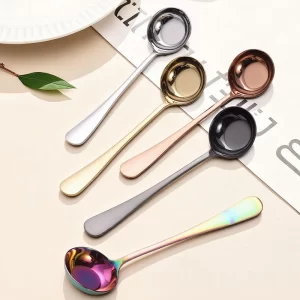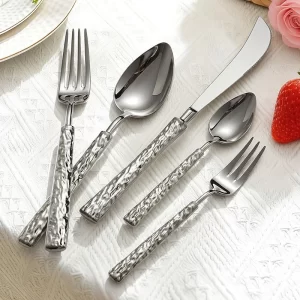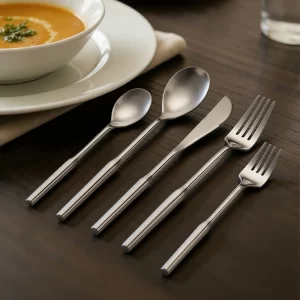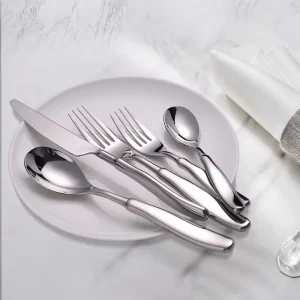
Evaluate samples with measurable observations, clear hold points and a written approval record.
قرار الشراءSeparate mandatory requirements from preferences. A high appearance score must never cancel an unresolved material or safety issue
Two flatware samples can look similar in a catalog and feel different in the hand. The useful question is not simply which one looks more expensive. It is whether each sample meets a written specification and performs the job your customer needs.
A flatware sample inspection checklist should produce a decision: approve, hold for clarification, or reject a defined feature. Use the scorecard below as a buyer-designed comparison method. It is not a laboratory standard, a statistical shipment inspection plan or evidence that a product has passed testing.
Prepare a fair comparison
Assign each sample a code before inspecting it. Record its source, date, stated material, intended finish and whether it is a stock sample or an order-specific sample. Compare equivalent utensils under the same lighting with the same measuring method.
Keep packaging until the review is complete. A scratch caused by the packing arrangement can be more useful information than a polished piece displayed alone. Photograph the sample on arrival, including any damaged protection or loose components, so later handling does not obscure the starting condition.
Separate mandatory checks from preference scores
Use mandatory hold points for unresolved material identity, unexpected damage, sharp burrs, loose attached components or missing required documentation. An attractive finish must not compensate for a safety concern. For routine commercial preferences, a simple score can help multiple reviewers discuss the same product.
| Buyer-designed sample review worksheet — not a test standard | ||
| Identity | Pattern, piece type, material proposal | Match, mismatch or unresolved |
| Dimensions | Length, width and agreed measuring points | Actual measurements |
| Edge quality | Spoon rim, tine gaps, handle edges | Location and close photograph |
| Surface | Front, back, neck and recessed areas | Comparison with finish reference |
| Handling | Balance, grip and intended tableware fit | Specific observation |
| Packing | Separation, movement and removal | Damage or pack-trial notes |
For preference scoring, define 0 as unsuitable, 1 as needing revision, 2 as acceptable and 3 as preferred. Do not present the resulting total as a universal quality rating. It is an internal decision aid for the chosen customer and application.
Inspect the areas that photographs tend to hide
Turn each piece over. Look between fork tines and around the transition from bowl to handle. Check decorative recesses and the underside of attached handles. These locations may receive less attention in front-facing product images, but they remain part of the user’s handling and cleaning experience.
Use appropriate visual inspection and handling precautions; do not run bare fingers along a suspected sharp edge. If a feature needs a mechanical, chemical or durability assessment, ask a qualified provider to specify the method. A casual bend or scratch demonstration is not a controlled test with a reproducible result.
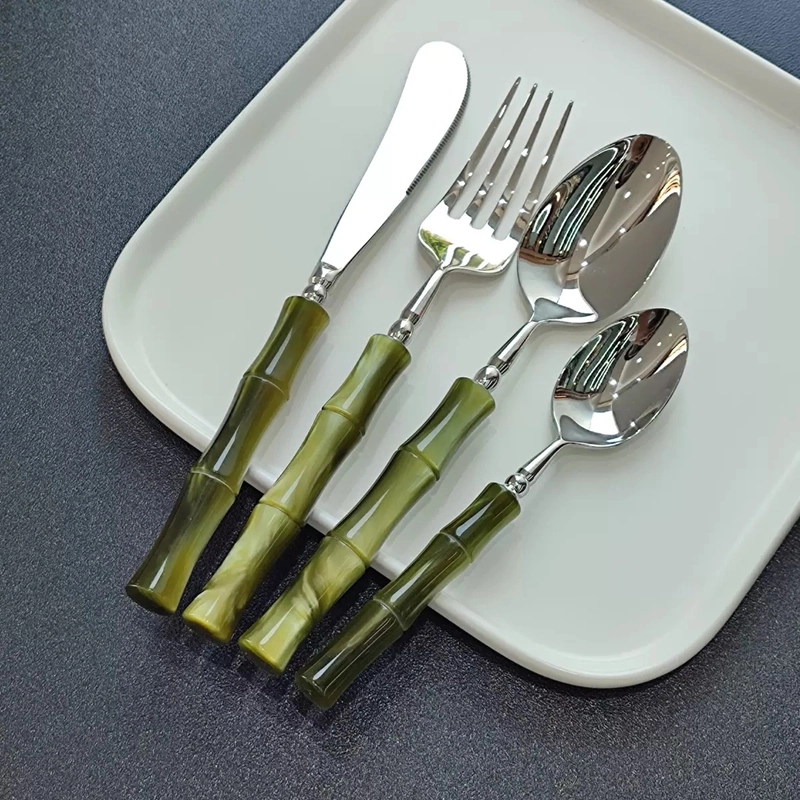
Fork gaps, tine edges and spoon rims deserve a close visual review. AI-generated conceptual illustration; not an actual Mcallen product, factory or test photograph.
Evaluate cleaning claims under defined conditions
Ask for the intended care instructions and supporting evidence before making a dishwasher claim. If a customer trial is appropriate, document the detergent, equipment, cycle, water conditions, loading and observations. An informal trial can inform purchasing but should not be presented as formal certification.
إن BSSA cleaning guide identifies chloride exposure and unsuitable abrasive media as potential causes of stainless surface damage. This supports checking the cleaning environment alongside the item. Decorative coatings and composite handles also need product-specific care guidance; general stainless steel advice does not establish their durability.
For an internal comparison, let two reviewers record observations independently before discussing the score. If their assessments differ, identify the exact feature rather than averaging away the disagreement. A comment such as “visible rough area inside the second tine gap” gives the supplier a location to investigate; “quality feels low” does not. Record any revised sample under a new identifier so its acceptance cannot be confused with the original.
Write approvals that preserve the evidence
An approval should identify the sample, specification revision and any exceptions. For example: “Shape and balance accepted; packing and black finish require revised samples.” This is more useful than “sample OK,” which can be interpreted as acceptance of every attribute.
Retain a reference sample and approval photographs. Before production, resolve the hold points and confirm whether the approved sample matches the actual order. Later, use a separately agreed shipment inspection plan; a few attractive pre-order samples cannot establish the defect rate of an entire lot.
صياغة يمكن تكييفها لتناسب طلب عرض الأسعار القادم الخاص بك
Please provide samples identified by pattern, piece type, material, finish and sample revision. State whether each is a stock reference or represents the proposed order. Include dimension drawings, suggested measuring points, care instructions and available supporting reports. Identify differences from the quotation and provide the intended packaging sample. We will return a feature-by-feature approval record and list any unresolved items before production approval.
قم بتكييف هذا الطلب وفقًا للمنتج والوجهة والطلب المحدد. قم بتسوية البنود المعلقة قبل تأكيد الشراء.
الأسئلة التي يطرحها المشترون
Should we score every category equally?
Only if equal weighting reflects the customer’s needs. A restaurant might prioritize handling and cleaning; a gift retailer might give packaging more weight. Mandatory requirements remain separate in either case.
How many samples are enough?
There is no universal count. Request enough to review the relevant pieces and variations, and agree any formal sampling approach with your inspection provider based on the order and risks.
Request samples with a clear review basis
Request samples of the shortlisted pattern and confirm which material, finish and packaging each sample represents.
Explore flatware patterns ↗ناقش طلبك
المصادر والأسس التحريرية
- BSSA: Cleaning methods for stainless steel — Background on cleaning conditions, chlorides and unsuitable abrasive media.
- مجموعة أدوات المائدة السائبة من ماكאלن — Product selection for order-specific sample requests.
مزيد من القراءة: Mcallen’s overview of stainless steel flatware quality.