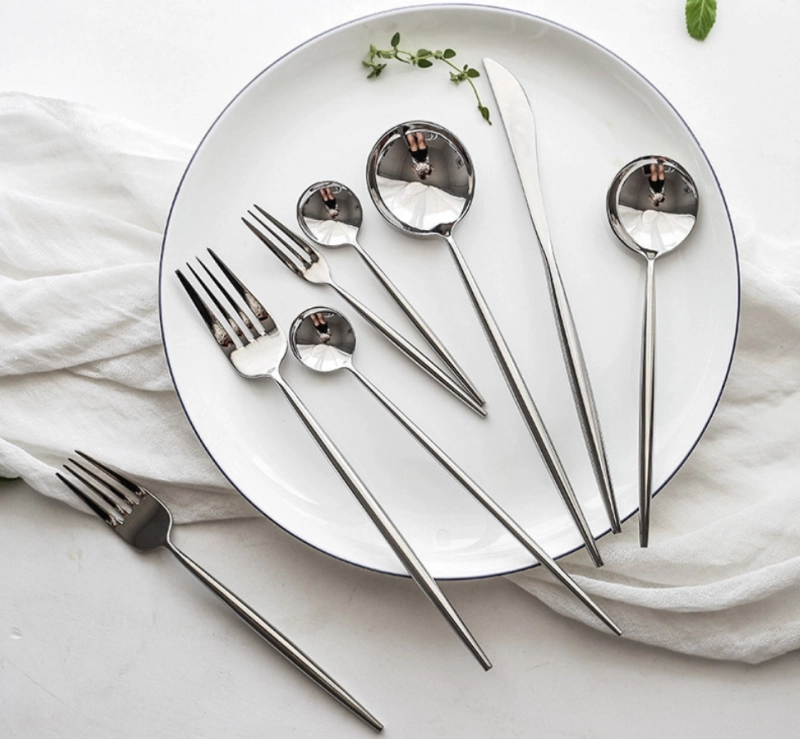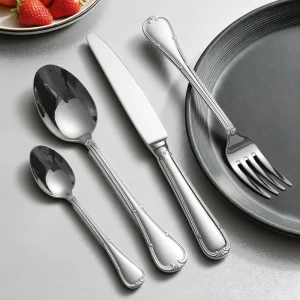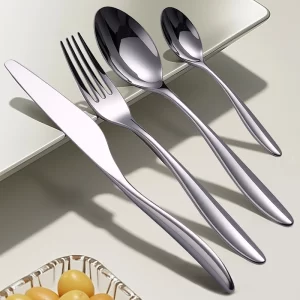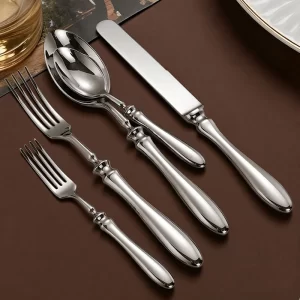
Common restaurant flatware procurement challenges include frequent replacement due to bending or corrosion, inconsistent quality across batches, and poor performance under intensive dishwashing cycles. Mcallen explains how to select durable restaurant flatware from a B2B procurement perspective, covering materials, manufacturing, testing standards, and supplier systems.
What Defines Durable Restaurant Flatware?
Material Composition
- 18/10 stainless steel (AISI 304): Best corrosion resistance & premium appearance
- 18/8 stainless steel: Balanced cost and performance
- 18/0 stainless steel (430): Budget option with lower corrosion resistance
Recommendation: 18/10 stainless steel is the standard for fine dining applications.
Manufacturing Method
- Forged flatware: Higher density, stronger structure, premium feel
- Stamped flatware: Cost-effective, suitable for casual dining
Fine dining projects should prioritize forged construction.
Surface Treatment
- Mirror polishing for visual quality
- Electropolishing for corrosion resistance
- Passivation to remove free iron and prevent rust
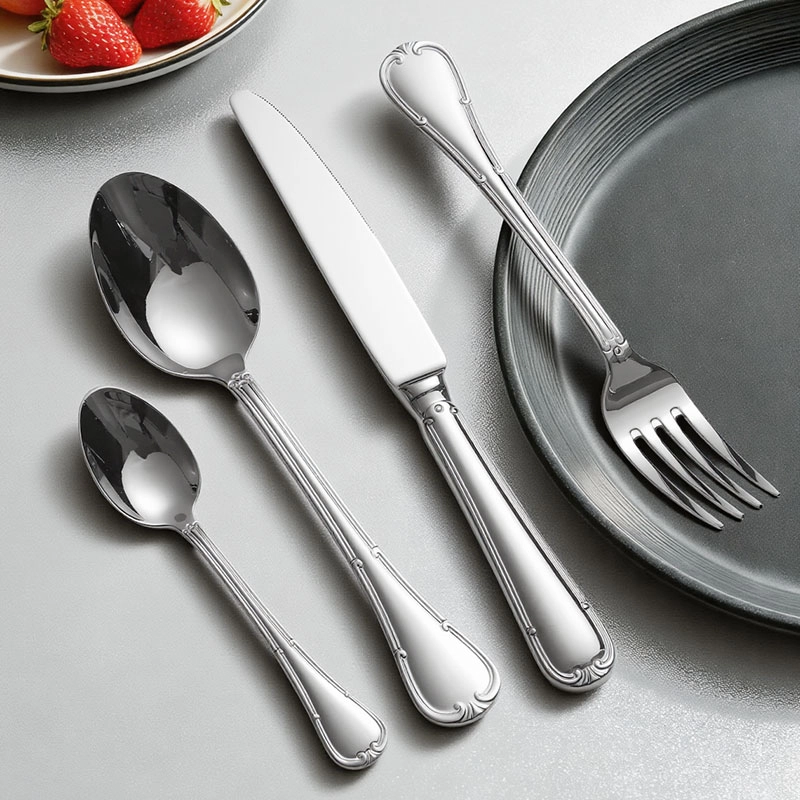
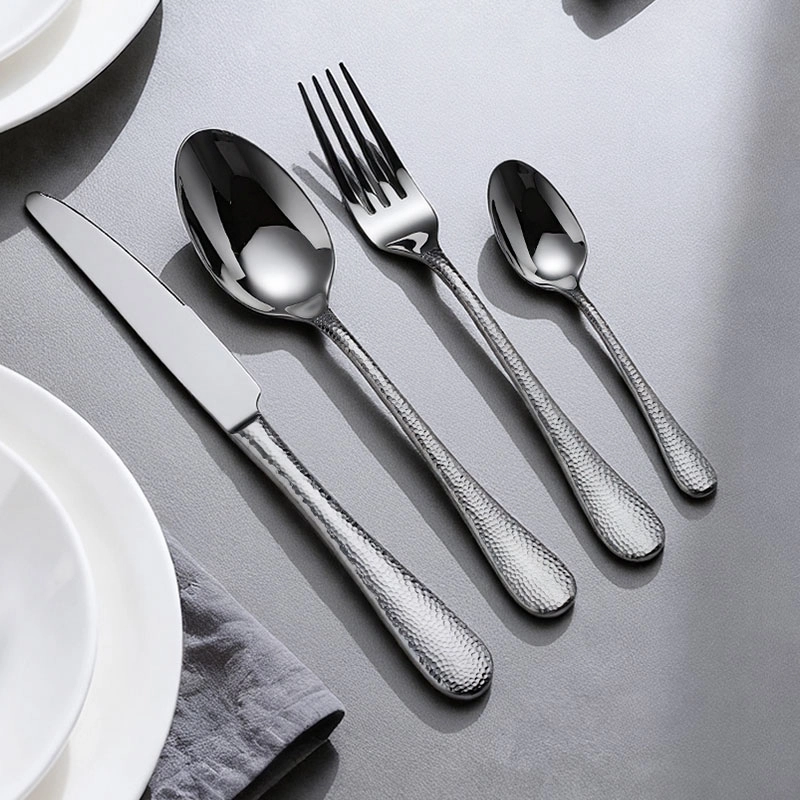
Recommended Flatware Specifications for Fine Dining Projects
| Item | Recommended Standard |
|---|---|
| Material | 18/10 stainless steel |
| Construction | Forged |
| Weight (Dinner Fork) | 60–70g |
| Neck Thickness | 3.5–4.5 mm |
| Finish | Mirror polish / electropolished |
| Treatment | Passivation required |
Auditable Compliance and Testing of Durable Restaurant Flatware
Dishwasher Resistance (EN 12875-1)
EN 12875-1 standardizes mechanical dishwashing resistance tests for utensils, and the EN ISO 8442 series covers stainless cutlery performance. Use these as the backbone for a cycle-based durability requirement. Specify cycle count, detergent chemistry, temperature, and site-representative water hardness.
Corrosion Resistance (ASTM B117)
ASTM B117 specifies a salt fog exposure (5% NaCl at 35°C). It’s a comparative test—not a direct predictor of in-situ life—but it’s useful for side-by-side evaluation of finish and passivation quality. Define exposure hours and photographic acceptance in your contract so results are actionable.
Passivation Verification (ASTM A967)
ASTM A967 defines chemical passivation methods for stainless-steel parts and includes verification options (e.g., copper sulfate test). Requiring evidence of this step is a practical way to boost corrosion stability under repetitive dishwashing.
Mechanical Strength (EN ISO 8442)
Flatware published ranges vary, require supplier-provided measurements and a bend/deflection test from a third-party lab (e.g., testing to relevant parts of EN ISO 8442-2 as administered by CATRA) to confirm functional stiffness.
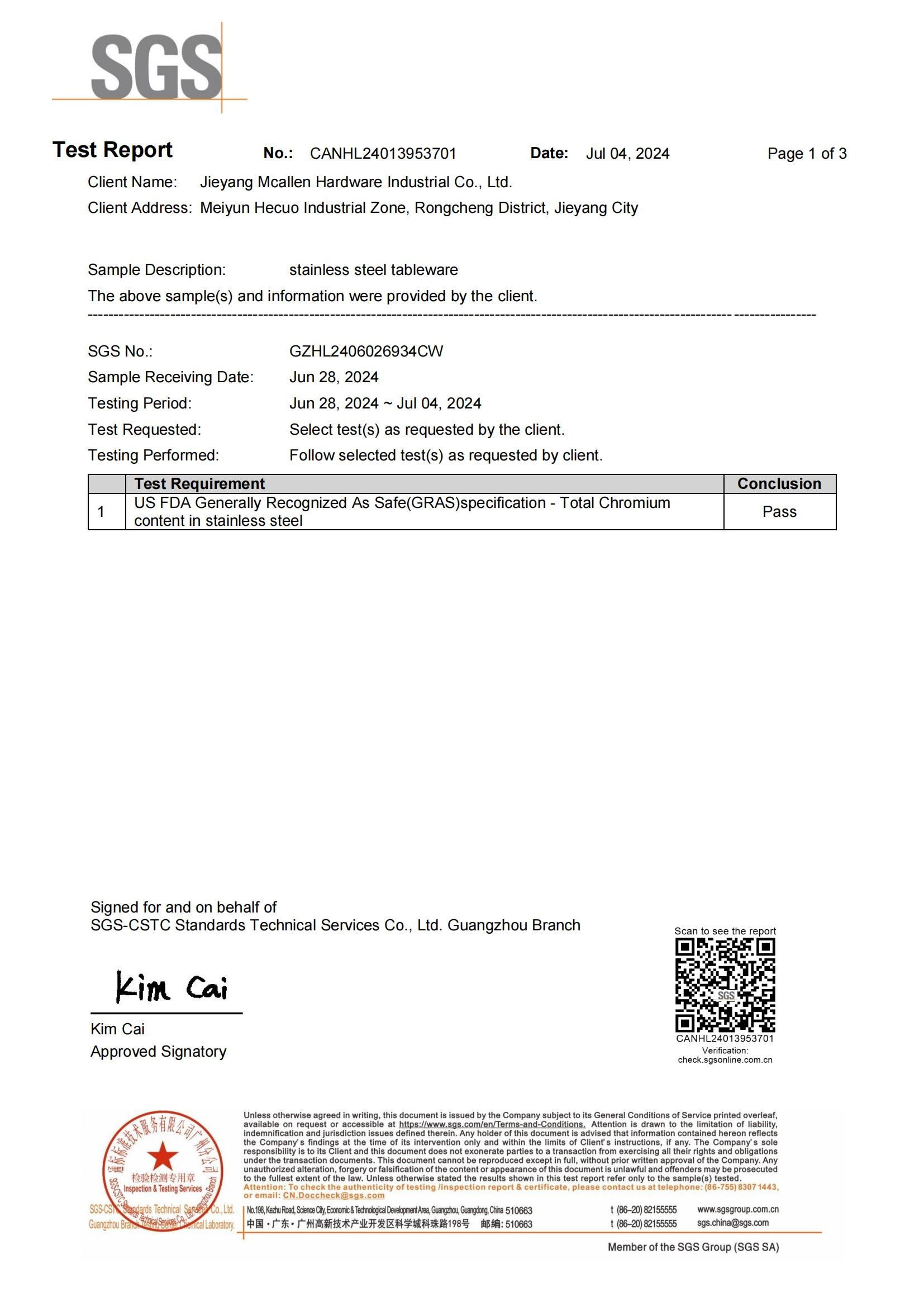
United States: NSF/ANSI 51
Food contact material safety standard. This standard clarifies the expectations for the use of stainless steel in food processing equipment and complements NSF/ANSI 51 standards regarding equipment design. When a supplier claims “NSF compliant,” an exact list of certifications or a declaration of compliant materials is required.
Europe: EC 1935/2004 + EC 2023/2006
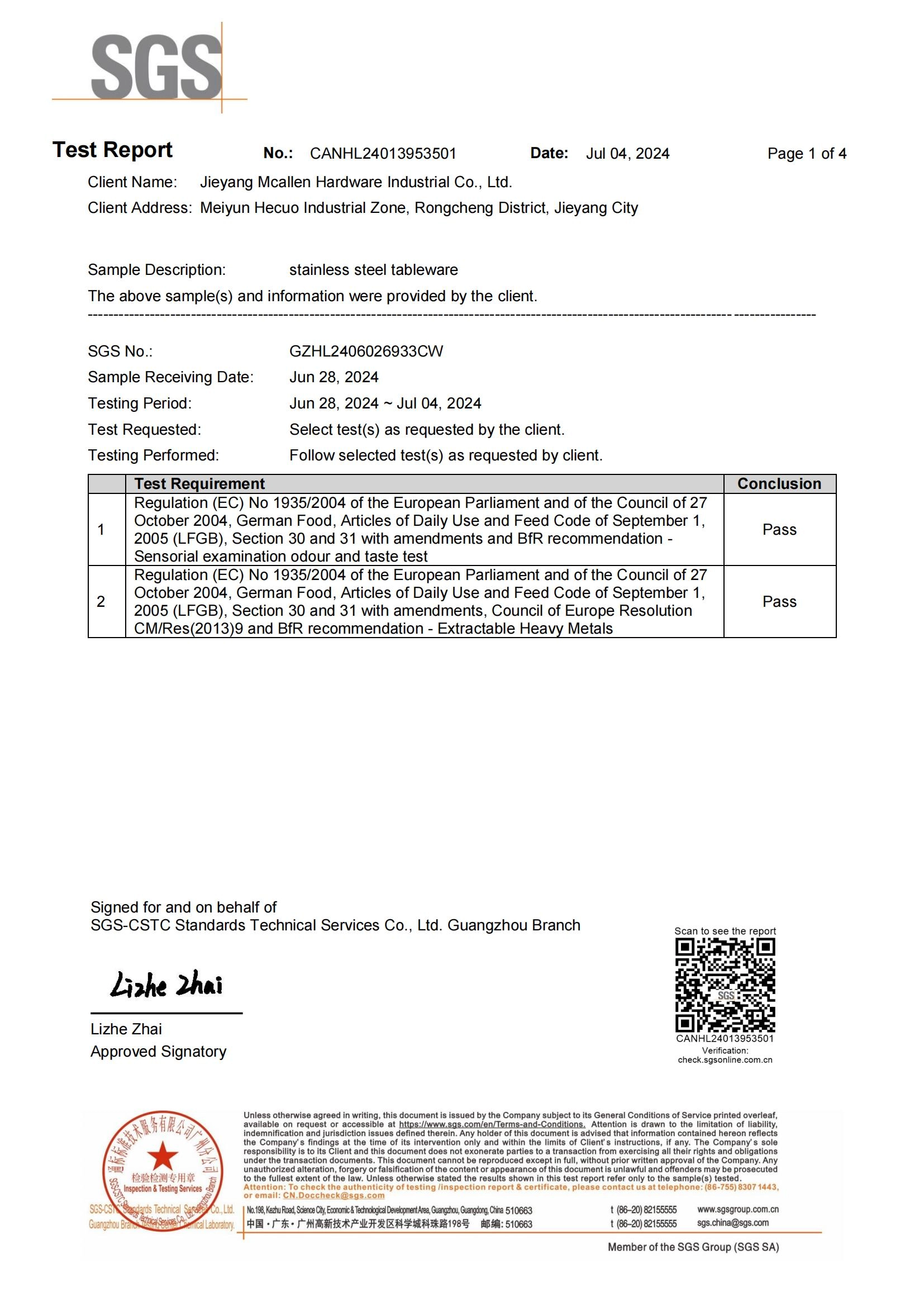
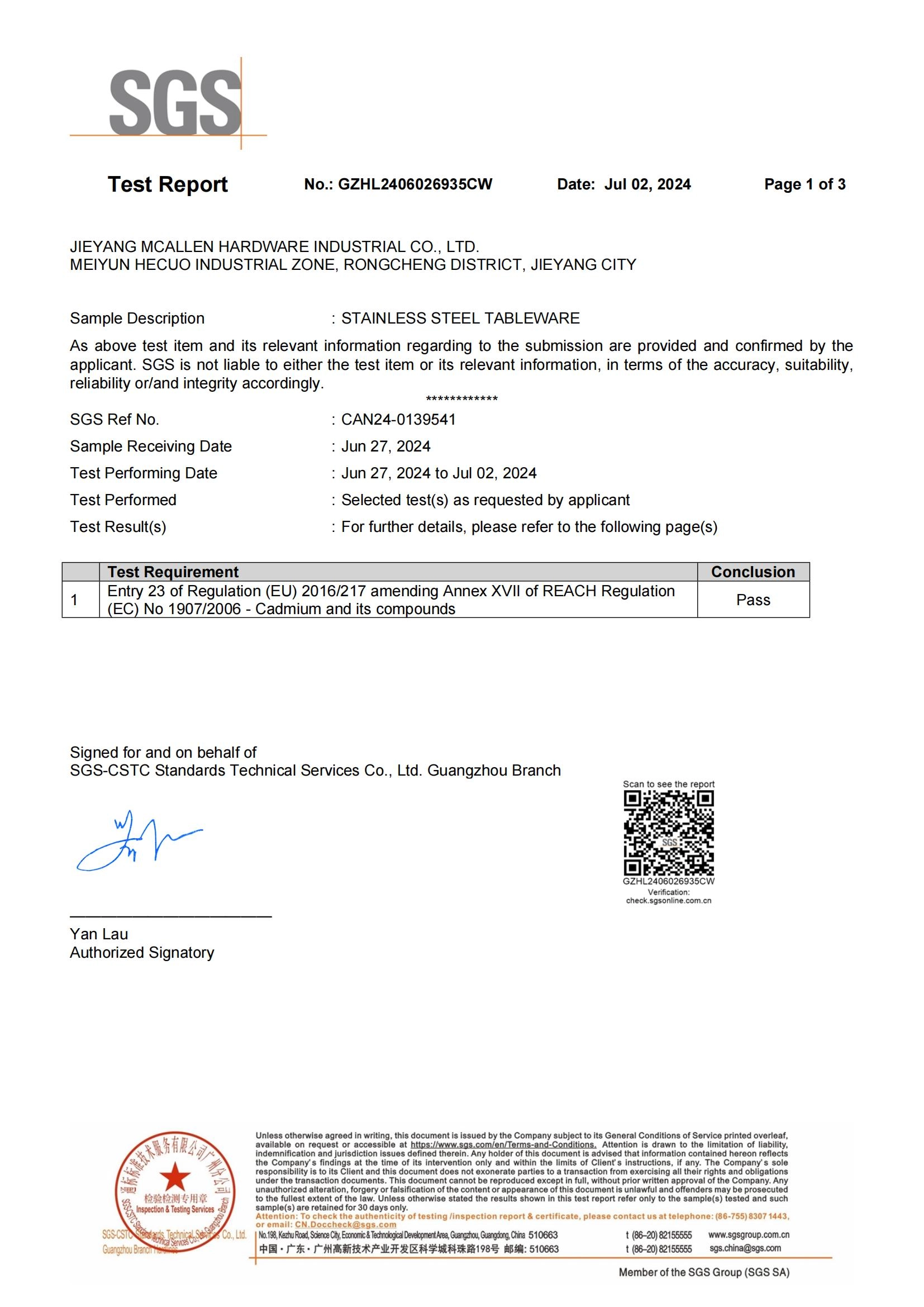
Food contact material safety standard and GMP regulation. In Europe, the framework is Regulation (EC) No 1935/2004 (materials must not transfer constituents that endanger health or alter food) plus Good Manufacturing Practice per Regulation (EC) No 2023/2006. Metals are not fully harmonized, so request a Declaration of Compliance referencing these regulations and any applied guidance (e.g., Council of Europe metals/alloys resolution) alongside test evidence for migration where applicable.
Always request: Declaration of Compliance (DoC) + test reports
Supplier Consistency: The Key to Long-Term Quality
Durability depends not only on material but also on manufacturing control systems.
Professional supplier requirements:
- Batch traceability system
- Retained samples per production lot
- Stable polishing and finishing process
- Material certification (steel grade verification)
- Quality control documentation (PPAP-like system)
Why it matters: Without process control, quality varies across replenishment orders.
Total Cost of Ownership (TCO) Analysis
TCO Formula:
TCO = Unit Price + Replacement Cost + Dishwasher Damage Cost + Logistics Cost
Higher-quality forged 18/10 flatware often reduces bending, corrosion, and replacement frequency—leading to lower long-term cost.
Inventory Strategy for Restaurants & Hotels
- Recommended: 2.5–3 sets per seat
- Implement regular inventory tracking
- Control loss through periodic audits
Tips to Choose Durable Restaurant Flatware for Fine Dining
Tip 1: Choose a suitable stainless steel material
For upscale restaurants, forged 18/10 stainless steel with chemical passivation is preferred; 316 stainless steel should only be considered when water chemistry is poor or hygiene requirements are extremely high.
Tip 2: Include acceptance testing in the contract
Including EN 12875-1 dishwasher cycle test and ASTM B117 salt spray comparative test, with photographic standards.
Tip 3: Require suppliers to provide process evidence
PPAP-like documentation, batch traceability, and retained samples to ensure consistent quality upon replenishment.
Tip 4: Adjust compliance documentation according to the region
the US uses NSF/ANSI 51 material safety standards; EU/German buyers must comply with EU 1935/2004 + GMP 2023/2006 regulations and provide a declaration of compliance.
Tip 5:Use replacement data to build a TCO (Total Cost of Ownership) model
quality, forging processes, and passivation treatments can typically reduce corrosion, bending, and appearance defects, thereby reducing hidden costs.
Why does working with a Professional Flatware Manufacturer Matter?
A reliable supplier ensures long-term operational stability. Key capabilities:
- OEM/ODM customization
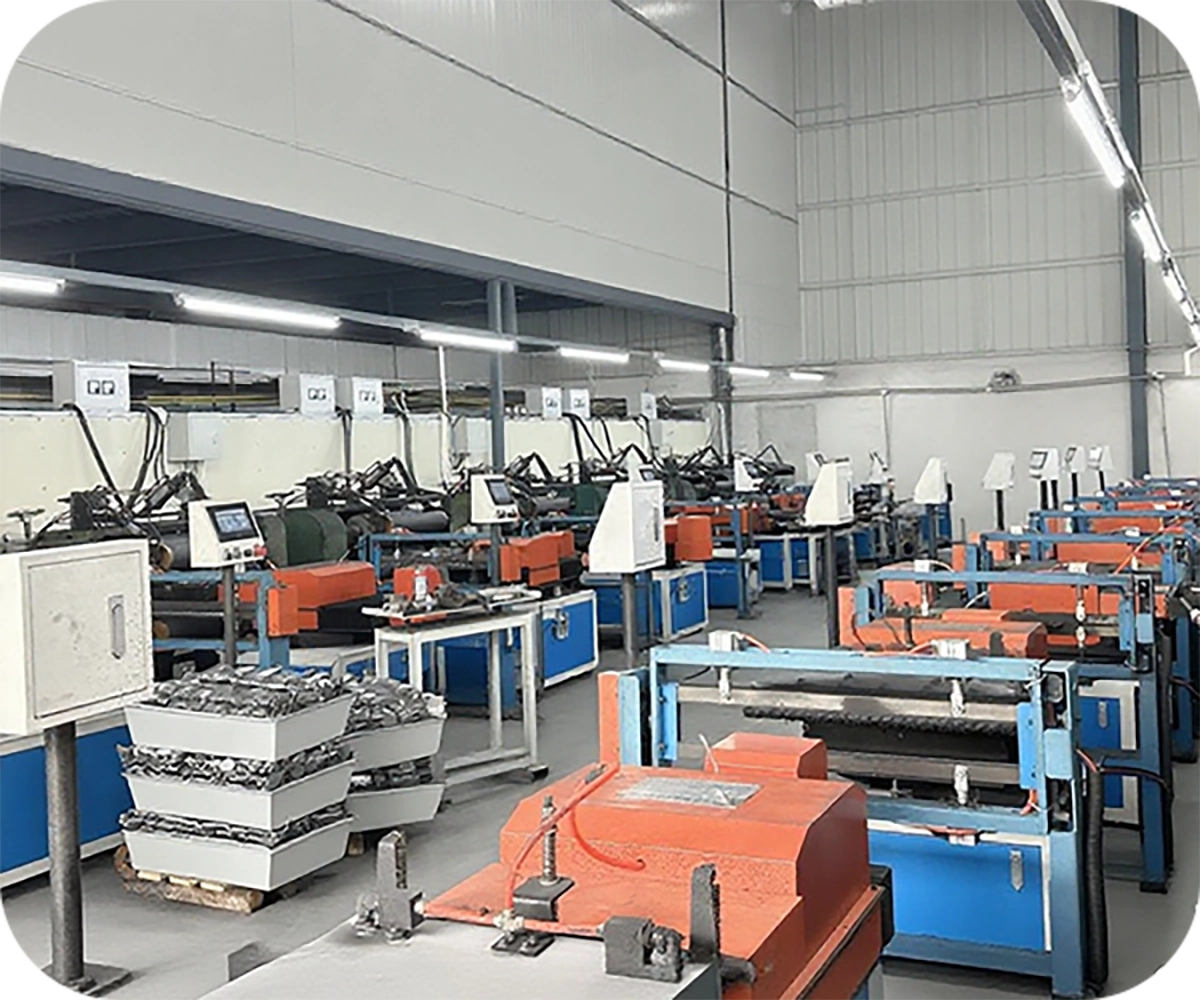
- Bulk production capacity
- Consistent quality across batches
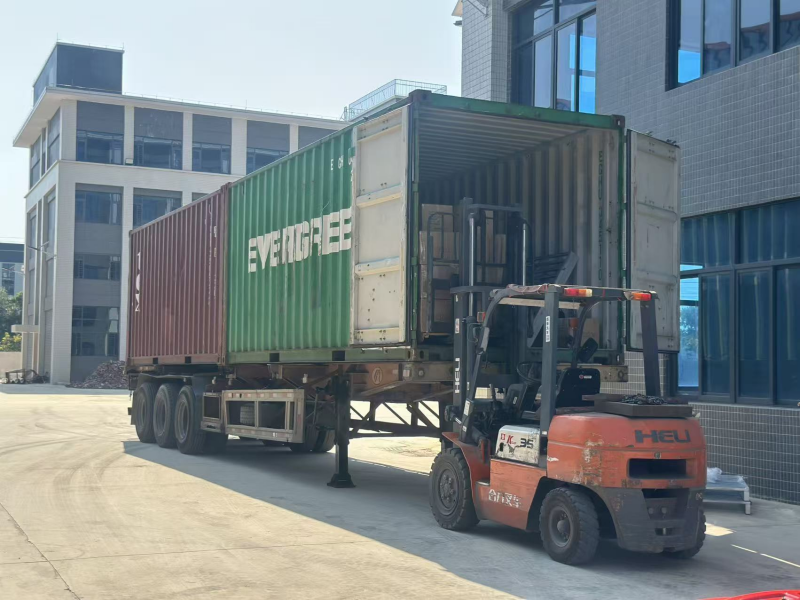
- Fast replenishment capability
- Hotel & catering project experience
Mcallen Professional Stainless Steel Flatware Solutions
We specialize in manufacturing commercial stainless steel flatware for global hotel, restaurant, and distributor clients.
Our advantages:
- 18/10 stainless steel premium options
- Forged construction for durability
- Advanced polishing & surface treatment
- Strict QC & batch consistency control
- OEM/ODM customization support
Whether for standard wholesale supply or customized projects, we support end-to-end solutions.
Conclusion
Durable restaurant flatware is a strategic procurement decision, not just a product choice. To achieve long-term value, b2b buyers should focus on material selection (18/10 stainless steel), forged manufacturing process, verified testing standards, and supplier process control systems. Mcallen is ready to supply quality stainless steel tableware. Contact us for stainless steel cutlery set bulk pricing, samples, and OEM customization solutions.