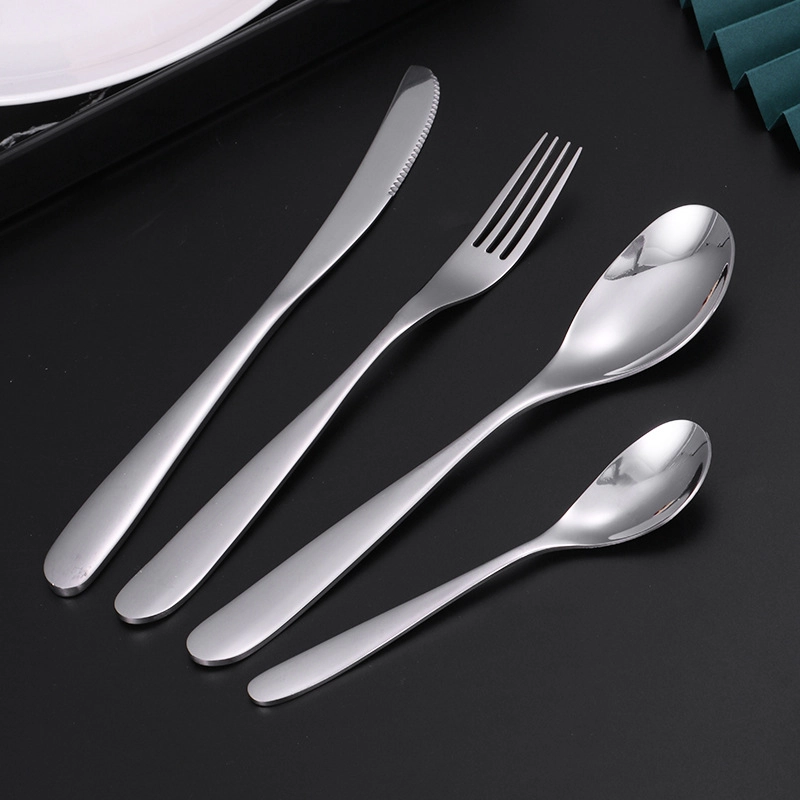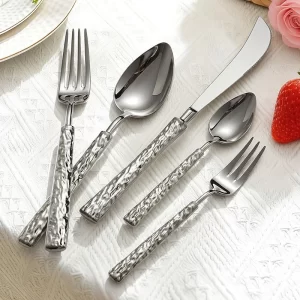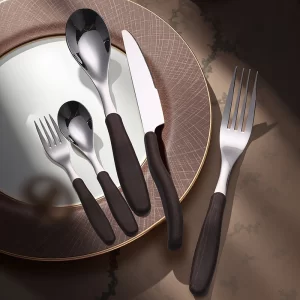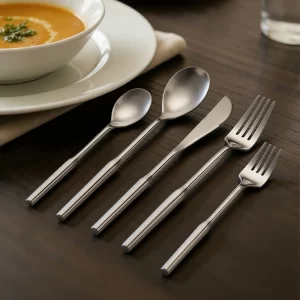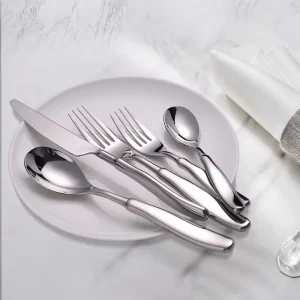
For restaurant groups, hospitality brands, and importers, custom flatware is rarely ordered “blind.” Before committing to a large rollout, most buyers want to validate design accuracy, logo durability, and real-world performance. This is where low MOQ custom flatware plays a critical role. As a leading stainless steel flatware manufacturer, Mcallen works with many buyers who begin with small pilot orders before scaling. This article explains what “low MOQ” actually means in custom flatware, why 300 sets is a realistic threshold for ODM logo projects, and how procurement teams can use low-MOQ orders to control risk without compromising manufacturing quality.
What Is Considered Low MOQ in Custom Flatware?
MOQ (Minimum Order Quantity) refers to the smallest batch a factory will accept for production. In flatware manufacturing, MOQ is closely tied to production economics- line setup, polishing batches, laser programming, and quality control must all be justified by volume.
In the context of custom flatware ODM, “low MOQ” does not mean unlimited customization at very small quantities. Instead, it usually applies to logo customization on existing designs, where tooling and molds are already in place.
Our Working Definition of Low MOQ Custom Flatware
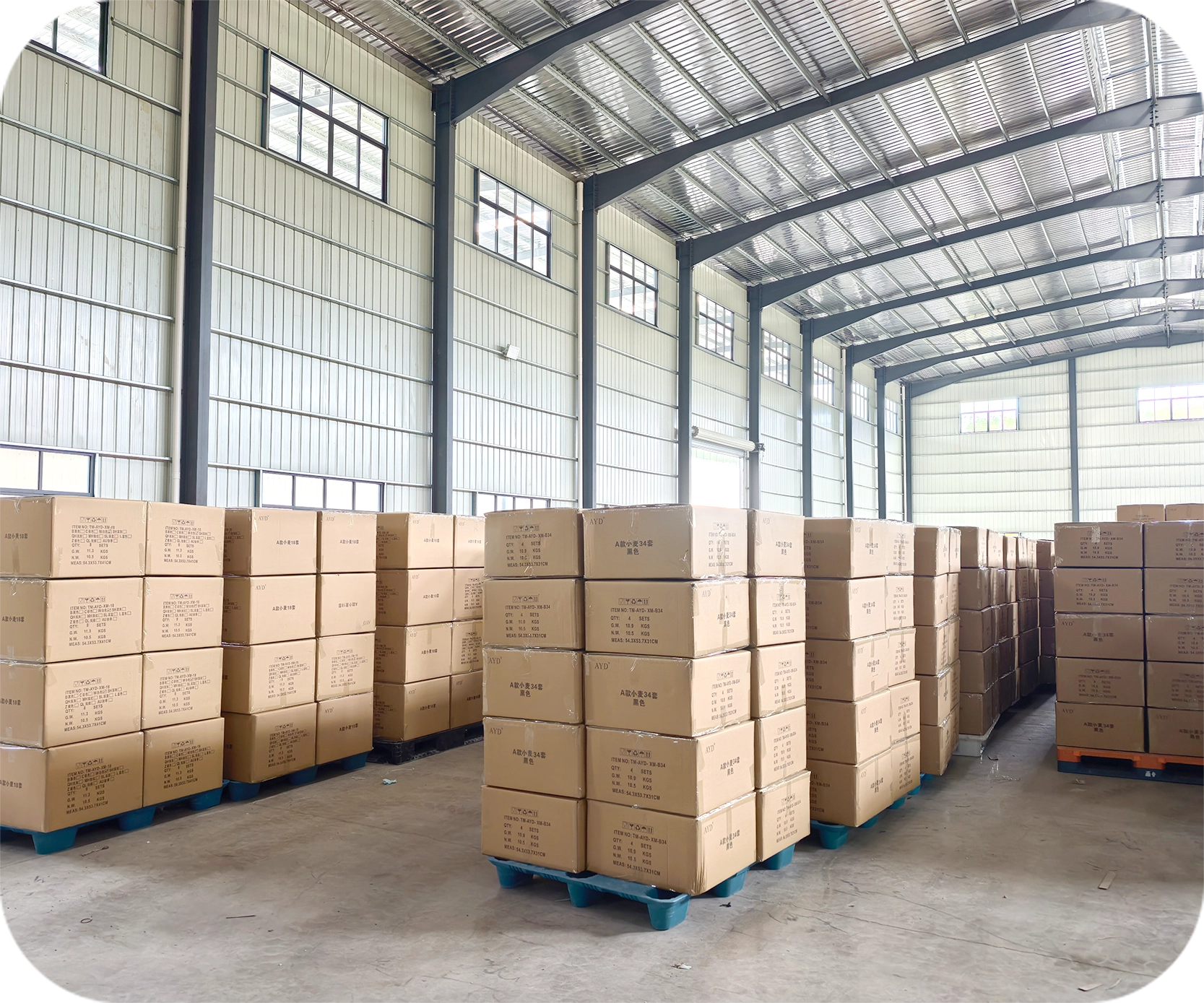
For clarity, this article defines low MOQ custom flatware as:
- MOQ: 300 sets or more per SKU
- Customization scope: Logo customization only
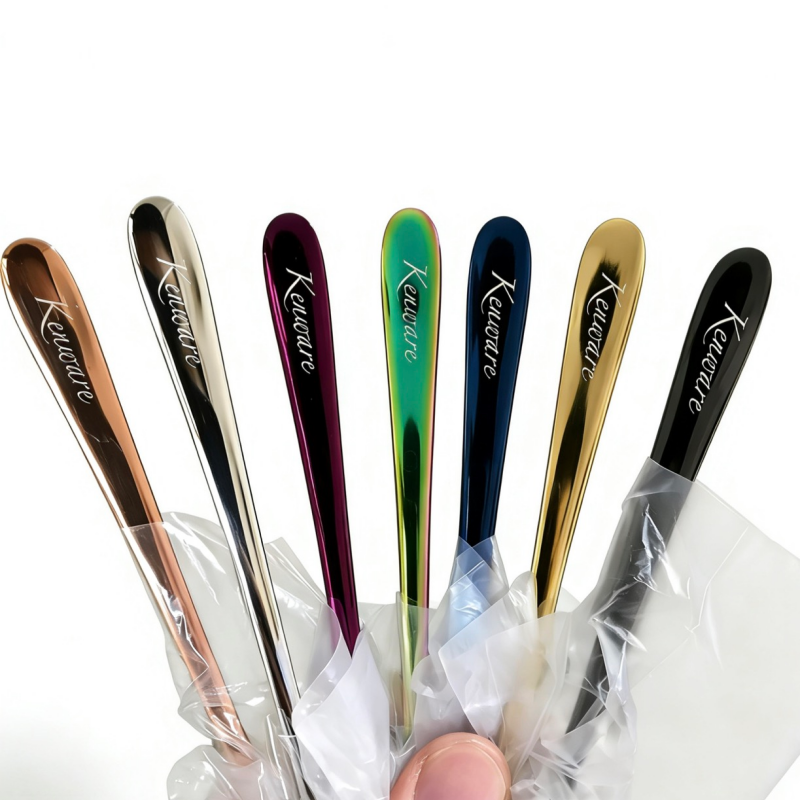
- Logo methods: Laser engraving or etching
- Product base: Existing flatware designs (no new molds)
This definition reflects what is realistically achievable for manufacturers while still offering buyers meaningful flexibility for pilot testing.
Why 300 Sets Is a Realistic Low MOQ for ODM Logo Orders
Across the stainless steel flatware industry, many manufacturers set 500 sets per style as a standard MOQ for custom or wholesale orders. Against that backdrop, 300 sets represent a genuine reduction—low enough to support testing, yet high enough to maintain production efficiency.
From a factory perspective, this threshold works because:
- Laser engraving programs can be reused across a defined batch
- Polishing and passivation processes remain efficient at this volume
- Quality inspection and packaging workflows stay economically viable
For buyers, 300 sets strike a practical balance between risk control and manufacturing stability.
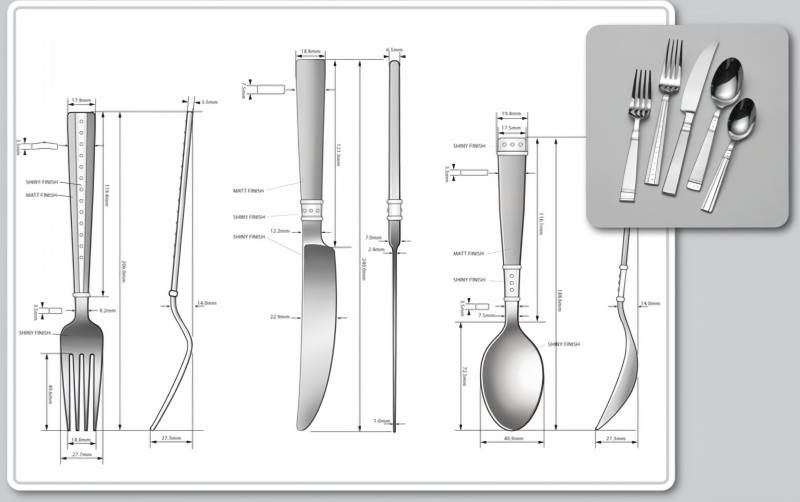
What You Can Do with Low MOQ Custom Flatware?
What Low MOQ Typically Covers?
Under a 300-set ODM pilot order, b2b buyers can reasonably expect:
- Custom logo engraving or etching on existing flatware models
- Standard stainless steel grades (e.g., 18/10, 18/8, 430)
- Proven finishes such as mirror polish, satin, or stone wash
- Consistent weight, balance, and dimensional tolerances
This scope is ideal for restaurant trials, regional rollouts, and private-label validation.
What Usually Pushes MOQ Higher?
Low MOQ does not usually apply when the project includes:
- New handle shapes or unique silhouettes (new mold development)
- Specialized PVD colors or plating with batch minimums
- Fully customized or premium printed packaging
In these cases, MOQ increases because tooling, plating baths, or packaging print runs must be amortized over larger volumes.
Why Factories Set MOQs in the First Place?
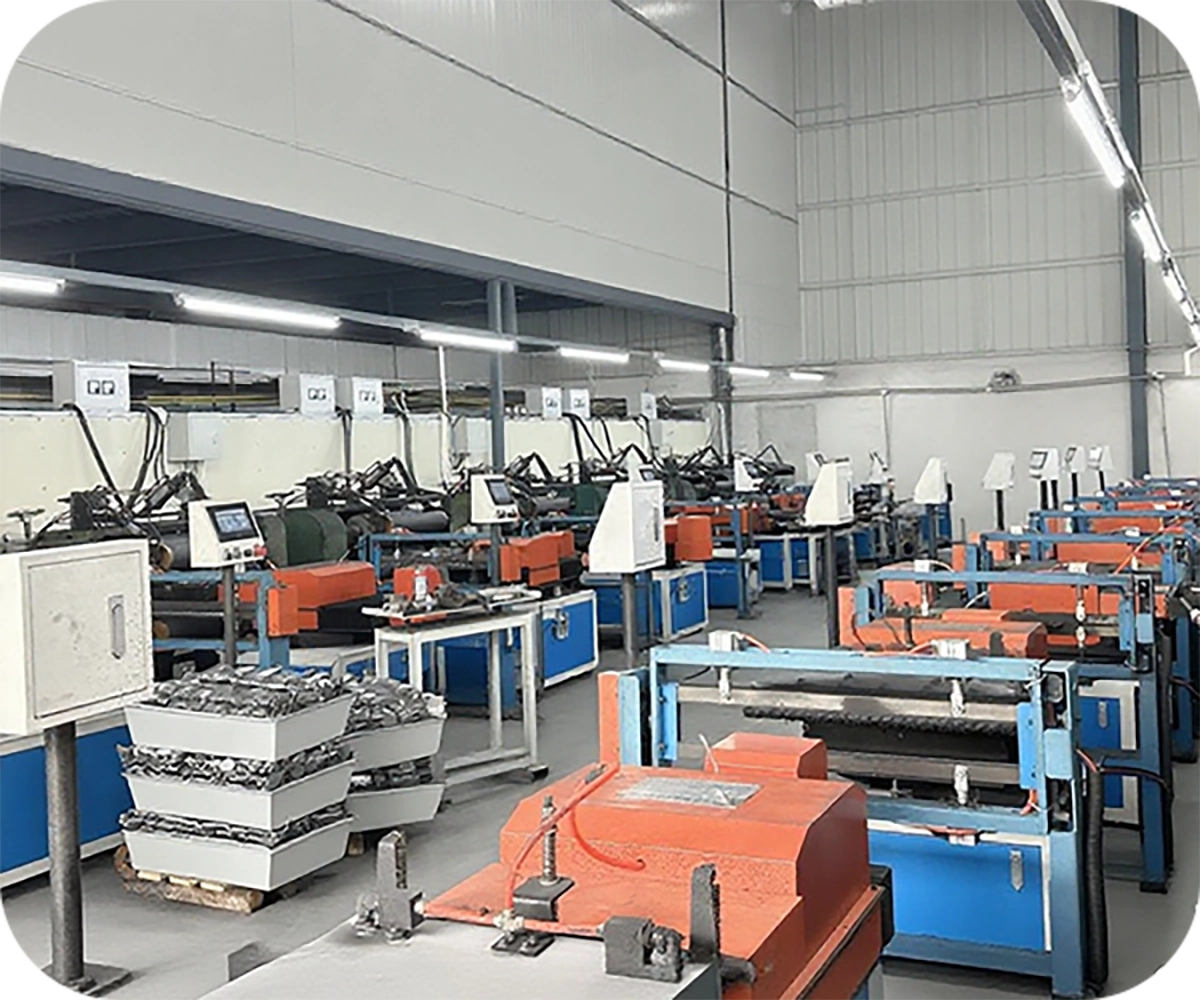
MOQs are not arbitrary. They reflect the underlying mechanics of production:
- Setup and changeover time: Laser files, fixtures, and inspection standards must be prepared before production starts
- Batch-based processes: Polishing, passivation, and cleaning are most efficient in defined batch sizes
- Capacity planning: Frequent micro-runs disrupt line scheduling and increase idle time
For this reason, low MOQ is most viable when customization is limited to surface branding on existing SKUs.
How Buyers Use Low MOQ Custom Flatware for Pilot Testing?
Low MOQ orders should be viewed as qualification runs, not shortcuts.
Step 1: RFQ and Design Lock
Confirm set composition, stainless steel grade, finish, and logo placement. Verify that no new mold development is required and that the order quantity is 300 sets per SKU.
Step 2: Sampling
- Existing-stock samples: 1–3 days if inventory exists
- Branded samples: 5–7 days, depending on logo setup
Step 3: Sample Approval (PPAP-Lite)
Approve a “golden sample” and document logo position, legibility standards, and surface finish expectations. Retained samples should be held by both the buyer and the factory.
Step 4: Pilot Production
For low-MOQ orders using existing molds, small-batch production can often be scheduled within 3–7 working days, subject to factory capacity.
Step 5: In-Field Testing and Scale Decision
Pilot sets are deployed for dishwasher cycles, abrasion checks, and real-use trials. If performance meets acceptance criteria, the buyer proceeds to a larger rollout.
Quality and Compliance Under Low MOQ Custom Flatware Orders
Low MOQ does not mean lower standards. Pilot orders should be treated as formal qualification batches.
- Retained golden samples linked to PO and inspection records
- Defined dishwasher and abrasion test cycles for logo durability
- Material verification for stainless steel grade and surface finish
- Food-contact compliance documentation (FDA, LFGB, REACH) supported by third-party reports
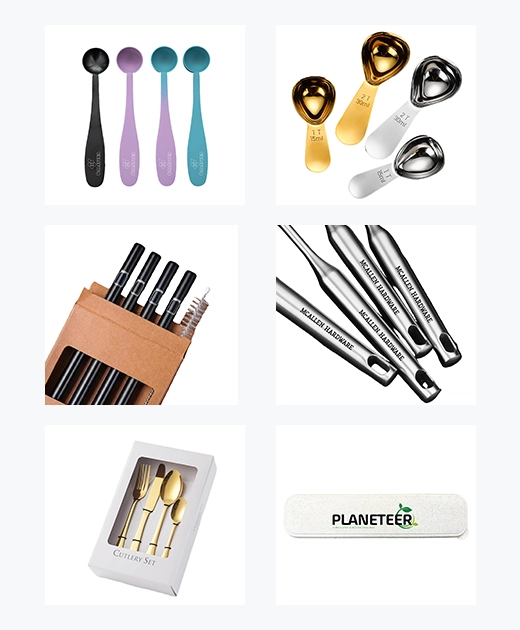
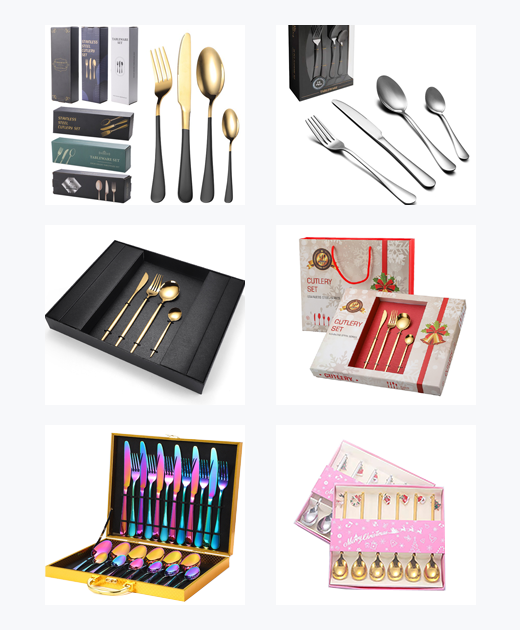
How Mcallen Flatware Supports Low MOQ ODM Projects?
Low MOQ pilot orders fail most often not because of price, but because of inconsistency, unclear acceptance standards, or unstable small-batch execution. Mcallen structures its low-MOQ ODM programs specifically to reduce these risks.
- 300-set pilot orders on selected flatware SKUs
- Laser engraving or etching logos with stable repeatability
- Clear sampling timelines and production SLAs
- Retained samples and documented acceptance criteria
- Smooth transition from pilot batch to scaled production
A De-Identified 300-Set Pilot Example
In 2025, a North American restaurant group conducted a 300-set laser-engraved flatware pilot across three locations:
- Branded sample lead time: 3-7 days
- Pilot production: 7 days after sample approval
- Initial defect rate: 1.3% (minor logo legibility issues, corrected)
- Compliance: Third-party food-contact documentation on file
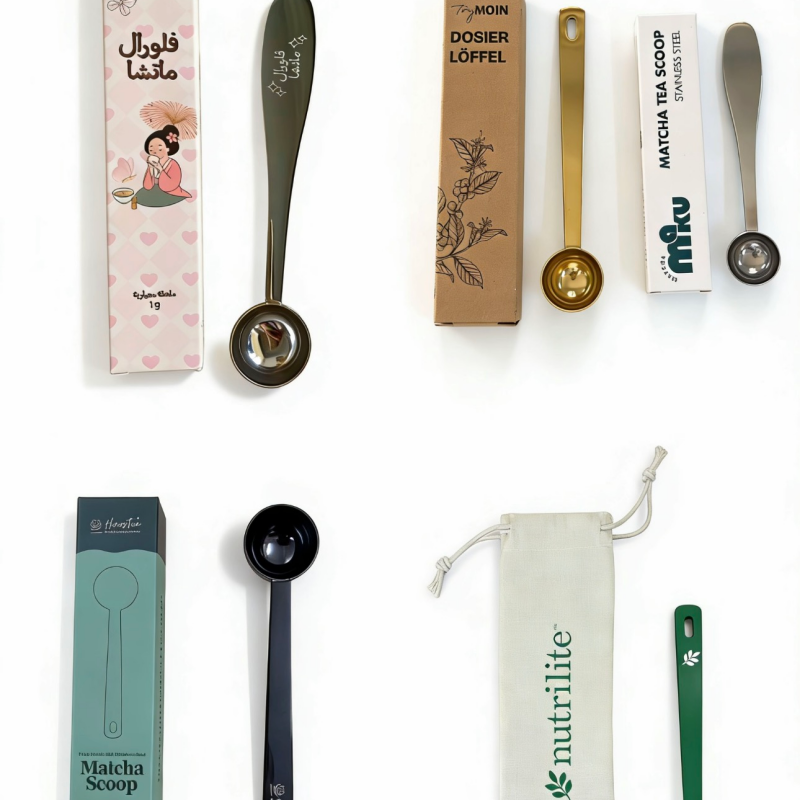
Following successful dishwasher and in-field testing, the buyer proceeded with a multi-location rollout.
When Low MOQ Custom Flatware Is Not the Right Choice?
Low MOQ pilots are not suitable if your project requires:
- Completely new flatware designs
- Highly specialized decorative finishes
- One-off presentation packaging
Welcome to Start a Low MOQ Custom Flatware Pilot
If you are evaluating a low MOQ custom flatware project, a structured pilot is the most efficient way to move forward.
To start, prepare:
- Confirm that your design can use an existing flatware model
- Limit customization to laser or etched logos
- Define acceptance criteria and sampling expectations upfront
- Use a 300-set pilot to validate performance before scaling
A disciplined low-MOQ approach helps procurement teams reduce risk, protect brand standards, and make confident sourcing decisions. Looking to evaluate a 300-set custom flatware pilot? Mcallen, a qualified manufacturer with existing molds and low-MOQ experience, can help you move from concept to validated production efficiently. Contact us to start your low MOQ custom flatware projects!