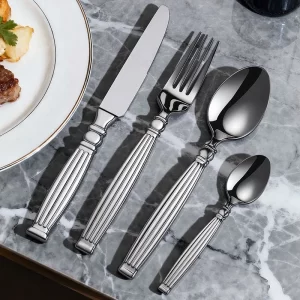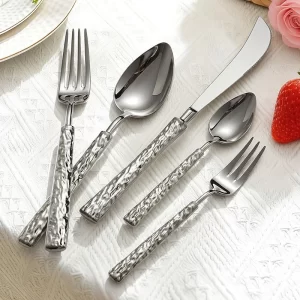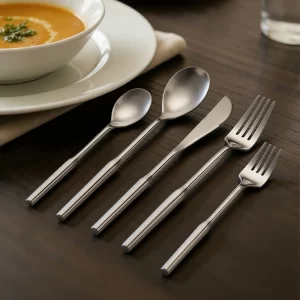
많은 스테인리스 스틸 식기 제품들은 겉보기에는 똑같아 보입니다. 18/10 스테인리스강과 같은 동일한 등급의 재료를 사용하더라도, 식당이나 호텔에서 보여지는 성능은 크게 다를 수 있습니다. 이러한 일관성 부족은 호텔·외식업계 구매 담당자와 유통업체들이 대량 식기를 조달할 때 가장 흔히 겪는 골칫거리 중 하나입니다. 이 기사에서 맥앨런은 제조업체의 관점에서, 동일한 스테인리스강 등급을 사용했음에도 불구하고 상업용 스테인리스 식기의 품질이 왜 차이가 나는지 분석할 것입니다.
왜 같은 재질 등급이 같은 품질을 의미하지는 않을까요?
공급업체들이 동일한 스테인리스강 등급을 표기하더라도, 식기의 최종 성능은 여러 가지 눈에 보이지 않는 생산 요인에 따라 달라집니다. 재료 등급은 단지 출발점일 뿐, 최종 품질 기준은 아닙니다.
상업용 스테인리스 스틸 식기 생산에서 제품의 차이는 주로 원자재 조달의 안정성, 가공 공정 관리, 마감 정밀도에서 비롯됩니다. 18/10 스테인리스 스틸로 표기된 두 제품이라도 실제 사용 시에는 매우 다른 특성을 보일 수 있습니다.
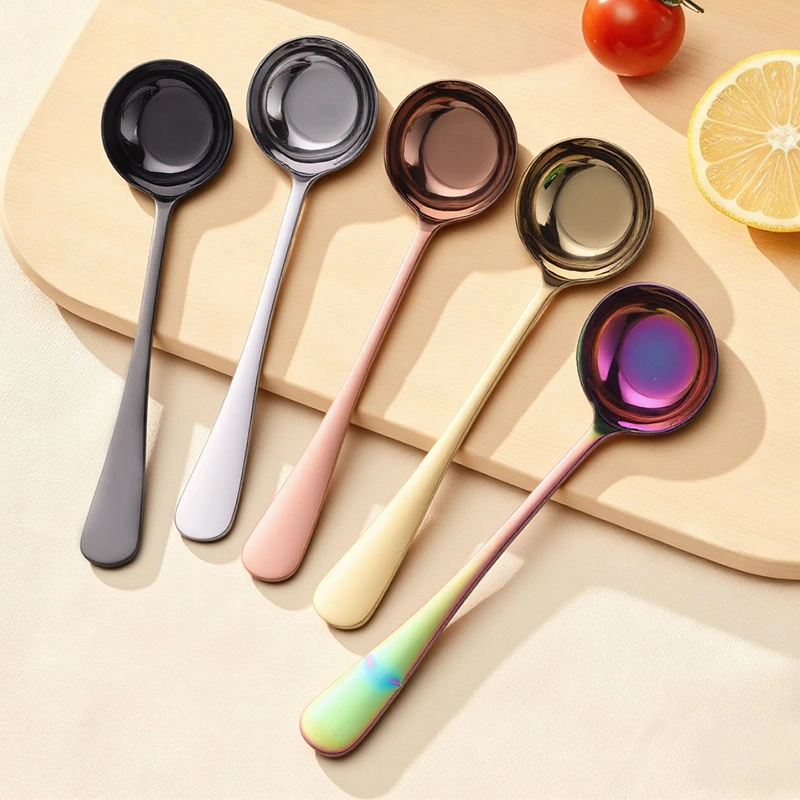
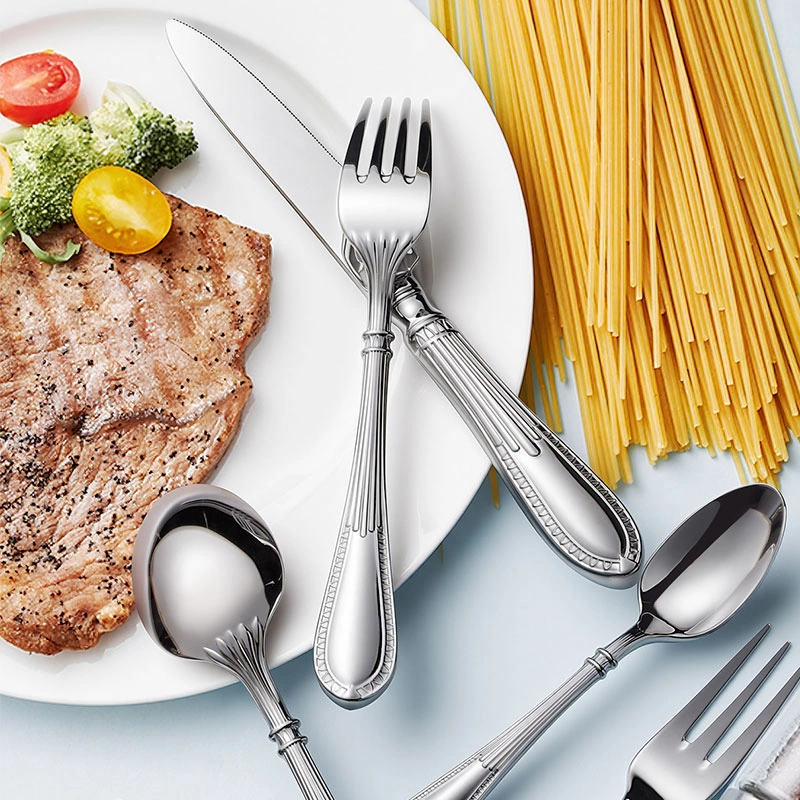
요인 1: 원자재 조달처 및 강재의 일관성
스테인리스 스틸 식기의 품질에 영향을 미치는 가장 큰 요인 중 하나는 원료의 균일성. 산업용 스테인리스강은 공급업체, 정제 공정 및 배치별 안정성에 따라 차이가 있을 수 있습니다.
고품질 식기 제조업체 강재의 성분을 엄격하게 관리하여 안정적인 내식성, 경도 및 내구성을 보장합니다. 저급 생산 라인에서는 혼합되거나 일관성이 없는 원자재 배치를 사용할 수 있으며, 이는 상업 환경에서의 장기적인 성능에 직접적인 영향을 미칩니다.
요인 2: 제조 정밀도 및 성형 공정
식기류의 성형 방식 또한 최종 품질에 상당한 영향을 미칩니다. 단조 압력, 스탬핑 정확도, 금형 정밀도 등은 모두 구조적 강도에 영향을 줍니다.
대량 생산 과정에서 성형 시 발생하는 미세한 편차는 두께 불균형, 손잡이 부분의 약화, 또는 무게 분포의 불균형을 초래할 수 있습니다. 이러한 문제들은 처음에는 눈에 띄지 않는 경우가 많지만, 식당에서 빈번하게 사용하다 보면 뚜렷하게 드러나게 됩니다.
호텔 및 외식 서비스 업계에서 사용되는 대량 생산용 스테인리스 스틸 식기의 경우, 구조적 일관성은 재질 등급만큼이나 중요합니다.

요인 3: 연마 및 표면 마감의 차이
표면 마감 처리 역시 스테인리스 스틸 식기의 품질 차이가 발생하는 또 다른 주요 원인입니다. 연마는 외관뿐만 아니라 내스크래치성과 세척 성능에도 영향을 미칩니다.
철저하게 관리된 다단계 연마 공정은 표면의 매끄러움을 높이고 미세 결함을 줄여줍니다. 반면, 마감 처리가 부실하면 미세한 흠집과 고르지 않은 표면 질감이 남게 되어, 상업용 식기 세척 환경에서 마모가 가속화됩니다.
이는 특히 식기류에 반복적으로 세척되고 강한 기계적 마찰에 노출되는 식당용 식기의 경우 더욱 중요합니다.
요인 4: 열처리 및 경도 제어
열처리 공정은 스테인리스 스틸 식기의 경도와 내구성에 영향을 미칩니다. 적절하게 제어된 열처리는 장기간 사용 시 발생하는 굽힘, 긁힘 및 변형에 대한 저항성을 향상시킵니다.
그러나 모든 제조업체가 일관된 열 제어 방식을 적용하는 것은 아닙니다. 온도나 시간의 차이로 인해 생산 배치마다 경도가 고르지 않게 되어, 대량 주문 시 성능에 일관성이 떨어질 수 있습니다.

요인 5: 품질 관리 및 배치 간 일관성
호텔·외식 업계의 구매 담당자들에게는 개별 샘플의 품질보다 일괄적인 품질 일관성이 더 중요한 경우가 많습니다. 단 한 개의 양호한 샘플만으로는 수천 개에 달하는 제품 전체에 걸쳐 안정적인 성능을 보장할 수 없습니다.
신뢰할 수 있는 스테인리스 스틸 식기 제조업체들은 모든 생산 배치에 걸쳐 균일한 광택, 안정적인 재료 조성, 일관된 구조적 강도를 보장하기 위해 엄격한 품질 관리 시스템을 시행하고 있습니다.
이것이 도매 식기 시장에서 노련한 제조업체와 저가 공급업체 간의 핵심적인 차이점입니다.
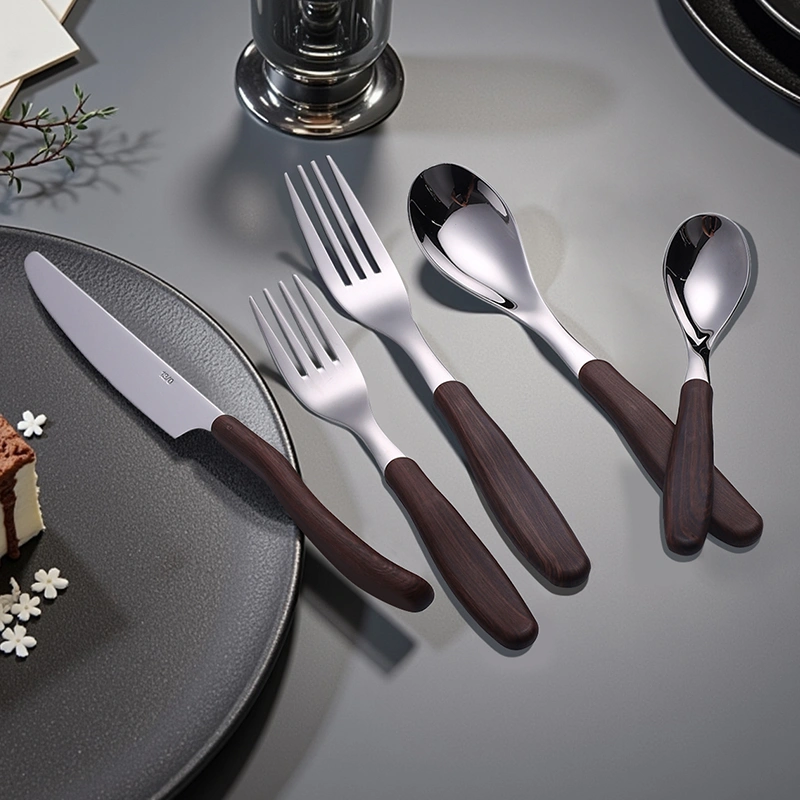
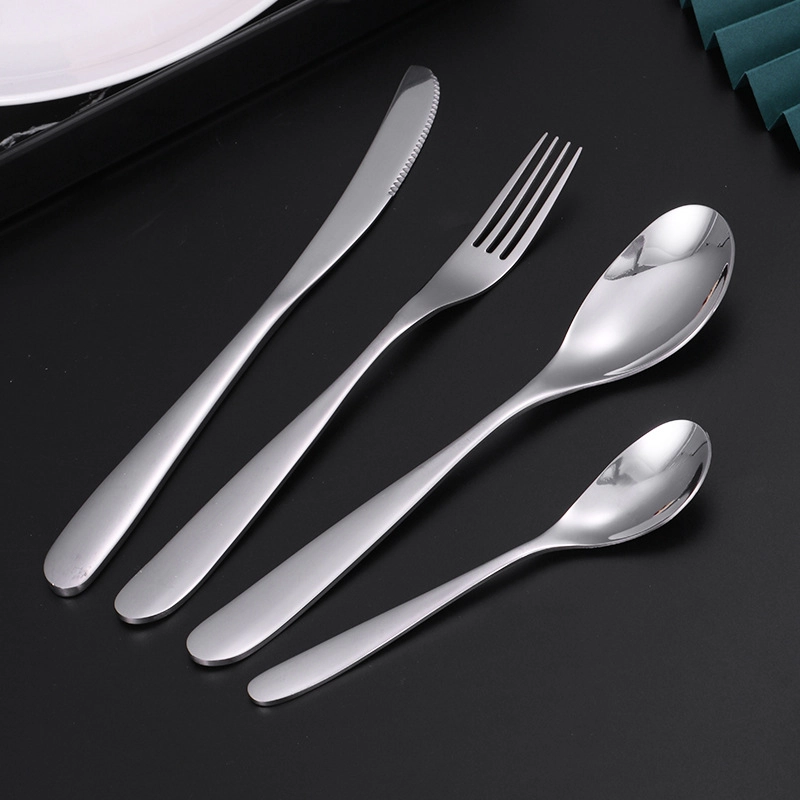
식기류를 조달할 때 구매자가 주의해야 할 점은 무엇인가요?
스테인리스 스틸 식기 공급업체를 평가할 때, 구매 담당자는 단순히 재료 등급 표기만 보고 판단해서는 안 됩니다. 대신, 다음 사항에 중점을 두어야 합니다. 생산 안정성, 마감 품질 및 배치 간 일관성.
여러 배치의 샘플을 요청하고, 식기세척기 성능을 테스트하며, 중량 일관성을 확인하는 것은 상업용 제품 공급업체의 신뢰성을 평가하는 실용적인 방법입니다.
식당, 호텔 및 유통업체의 경우, 다음을 선택하는 것은 안정적인 제조사 장기적인 교체 비용을 절감하고 전반적인 고객 경험을 향상시킵니다.
결론
스테인리스 스틸 식기의 품질 차이는 단순히 재료 등급 때문인 경우가 거의 없습니다. 이는 원자재 관리, 제조 정밀도, 표면 마감, 열처리 및 품질 검사 시스템의 결과입니다.
호텔·레스토랑 업계 프로젝트에서 대량 조달을 진행할 때, 올바른 공급업체를 선정하고 제품의 장기적인 품질 일관성을 보장하기 위해서는 이러한 숨겨진 요인들을 파악하는 것이 필수적입니다.
For 안정적인 대량 스테인리스 스틸 식기 공급, OEM/ODM 맞춤 제작 및 도매 가격, 맥캘런에 문의 귀사의 프로젝트 요구 사항에 대해 논의하기 위해.