Turn a broad material claim into a clear purchase specification your supplier, inspector and customer can all understand.
The buying decisionSpecify the steel by component, define how it will be measured, and connect the approved sample to the supporting records.
An order described as “18/10 stainless steel flatware, premium quality” still leaves important questions unanswered. Does the description cover the knife blade as well as the spoon? Which grade designation will appear on the order? What dimensions and inspection evidence define an acceptable delivery?
A useful flatware material specification connects each component to a named material, measurable requirements and supporting records. For a distributor, this creates a reference that purchasing, inspection and customer service can all use. Start with the finished set, then work backwards to its individual pieces.
Translate a sales description into a component list
The familiar 18/8, 18/10 and 18/0 labels describe chromium and nickel conventions in cutlery marketing; they are not a complete purchase specification. The British Stainless Steel Association’s cutlery guide associates 18/8 and 18/10 with the 304 family and 18/0 with 430, while explaining why hardenable steels are used for knife blades. Do not assume an “18/10 set” means every component uses the same steel.
Ask the supplier to identify the proposed grade under an agreed designation system. Record any permitted substitution explicitly. If the supplier proposes a different knife construction, compare its cutting function, balance and cleaning instructions before accepting it. A different blade material can be intentional; an unexplained material change is a separate issue.
Build a specification that can actually be inspected
The following is a buyer worksheet, not a Mcallen product specification. Fill the open fields from the selected product and approved sample.
| Component-level purchase specification worksheet | ||
| Piece identity | Pattern code, dinner fork, revision | Stops similar items being interchanged |
| 素材 | Agreed grade for this component | Avoids relying on a whole-set label |
| Dimensions | Length, width and measurement points | Makes different inspectors comparable |
| Thickness | Location and permitted range | “Heavy” does not identify a measurement |
| Piece weight | Target and agreed tolerance | Helps monitor consistency |
| Surface | Finish reference and acceptable boundaries | Converts “premium polish” into a decision |
| Supporting records | Material record, report and lot reference | Connects evidence to the goods |
Do not assign one thickness reading to an entire formed spoon. Geometry changes across the handle, neck and bowl. A measurement taken at an unspecified point can produce a disagreement even when both parties use accurate instruments. Annotated drawings or photographs should show exactly where to measure.
Keep material evidence separate from performance evidence
A composition result answers a material identity question. It does not independently prove that a fork has smooth edges, a knife cuts acceptably, or a colored coating will survive the intended cleaning routine. Those requirements need their own assessment.
Likewise, a magnet is a screening aid rather than a complete grade verification method. Ask the laboratory or inspection provider to select an appropriate identification method for the components and the question being investigated. Keep the sample identifier, report number and production lot together. A report that cannot be connected to the purchased item has limited value during a dispute.
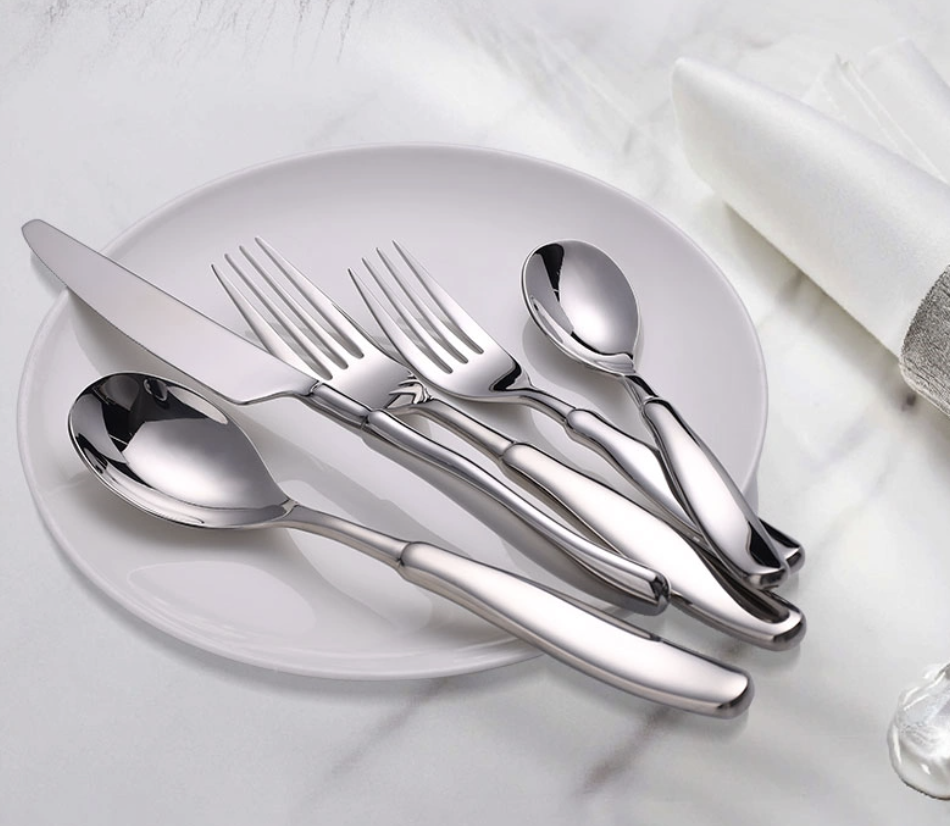
Connect each approved sample to its material records and order revision. AI-generated conceptual illustration; not a photograph of an actual Mcallen SKU or a test result.
Define the approval sequence before a deposit
Use three separate decisions: approve the proposed specification, approve the physical sample, then approve production against that reference. A catalog sample can help choose a shape, but it may not have the material, marking or finish intended for your order. Record those differences instead of approving it without qualification.
For example, a buyer might like a sample’s handle shape but request a different finish. The sample should then be marked “shape reference only.” A later sample with the required finish becomes the surface reference. This simple distinction prevents one physical object from being treated as proof of requirements it never represented.
Make repeat purchases easier to control
Store the specification with a revision number and the approval date. Require written review when material, construction or the surface process changes. Retain a reference sample in suitable storage and compare incoming goods under consistent lighting. Record what changed, who approved it and which order uses the new version.
マッカレン bulk flatware collection provides a starting point for choosing a pattern. Use that pattern reference to request the actual component specifications. An attractive photograph helps narrow a shortlist; the signed specification establishes what the distributor is buying.
Wording to adapt for your next RFQ
Please identify the proposed stainless steel grade for every utensil and for any separately constructed knife blade or handle. Include the pattern code, dimension drawing, measurement locations, target weights, proposed tolerances and finish reference. List the material records and finished-product reports available for this construction and destination. Clearly identify any difference between the submitted sample and the quotation. Material, construction and finish substitutions require written approval before production.
Adapt this request to your order and agree the final requirements with the supplier. It is a purchasing aid, not a claim that a particular product has been tested.
Questions buyers ask
Is a material certificate enough to approve a set?
No. It can support material identity, but the finished product also needs checks appropriate to its design, finish, intended use and destination market.
Should every piece have the same weight tolerance?
Not automatically. Agree realistic tolerances by piece and measurement method. A small teaspoon and a heavy knife have different geometry and manufacturing considerations.
Build a clearer flatware RFQ
Send your target market, selected pattern, piece list and component-level material requirements to request a matched quotation.
Explore Mcallen flatware ↗Discuss your specification
Sources & editorial basis
- British Stainless Steel Association: Cutlery stainless steel grades — material naming and knife-blade distinctions.
- Mcallen bulk flatware collection — product selection and customization context.
Further reading: Mcallen’s guide to stainless steel types for flatware.
Prepared with AI assistance using the linked sources and an original illustrative purchasing worksheet. No factory audit, first-hand production trial or laboratory testing is reported. Sources consulted on 7 September 2026. Final product specifications and supporting documents must relate to the selected order.